 Shiba Inu
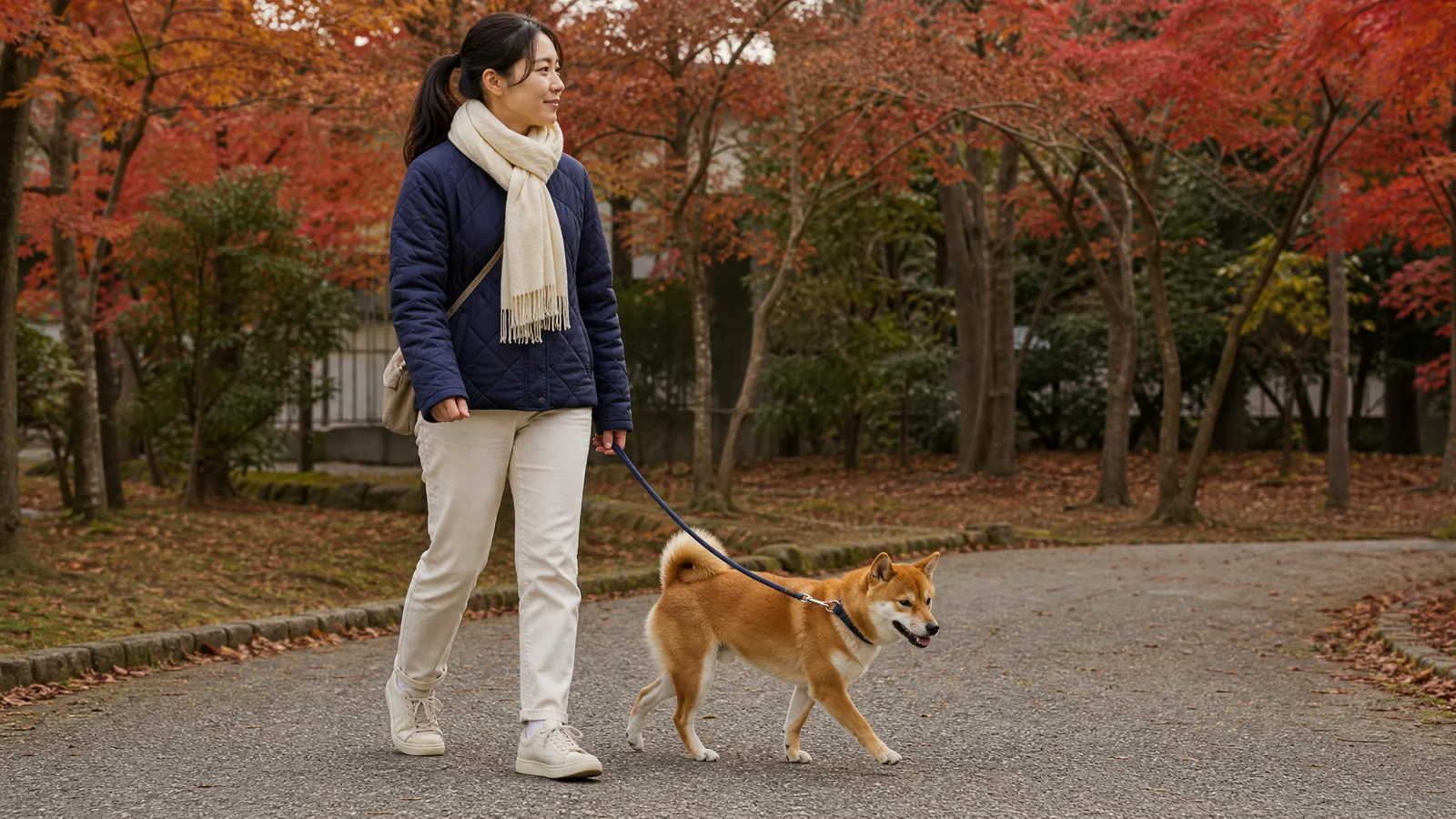
A four-month-old Shiba Inu is still a young puppy, not a defiant teenager in an adult body. Over the coming months, however, attention, confidence, fear responses, and interest in the environment can change. Skills that looked secure at home may become unreliable in a new place, and new physical or social pressures can alter familiar routines.
The household needs a policy review, not a punishment campaign. Decide which safety rules never change, which privileges depend on current behavior, and which expectations should become easier while the dog develops. This guide organizes the teenage months around those decisions, explains how weekly reviews work, and ends with one policy to adopt today.
The Teenage Months Begin With Policy, Not Defiance
Write household policy in observable terms. “The dog is stubborn” does not tell anyone what to do. “Exterior doors open only after the interior gate is latched” creates a rule that works even when attention is poor and visitors are distracting.
We recommend dividing decisions into three categories. A nonnegotiable protects health or safety. A privilege expands freedom when current behavior supports it. A training expectation describes a skill at a fair difficulty, which means it can be reduced when the environment changes.
- Nonnegotiable: secure leash, doors, gates, identification, and supervision
- Privilege: access to rooms, greetings, longer lines, or greater distance
- Expectation: response to a cue in the specific setting being practiced
The categories prevent an adolescent mistake from becoming a moral argument. A missed recall changes the privilege of distance, while the safety rule keeps the long line attached. The training expectation then returns to a place where the Shiba Inu can succeed.
The AVSAB training statement supports humane methods alongside clear household structure. Policy is not permissiveness. It tells the dog which behavior works and which access is available, while the household avoids fear and pain as teaching tools.
Shiba Inu Safety Rules Stay Fixed Through the Teenage Months
Adolescence does not earn experiments with open gates, off-leash roadsides, or unplanned dog greetings. Use secure equipment and controlled environments even when earlier responses were strong. Development can change behavior faster than household confidence changes.
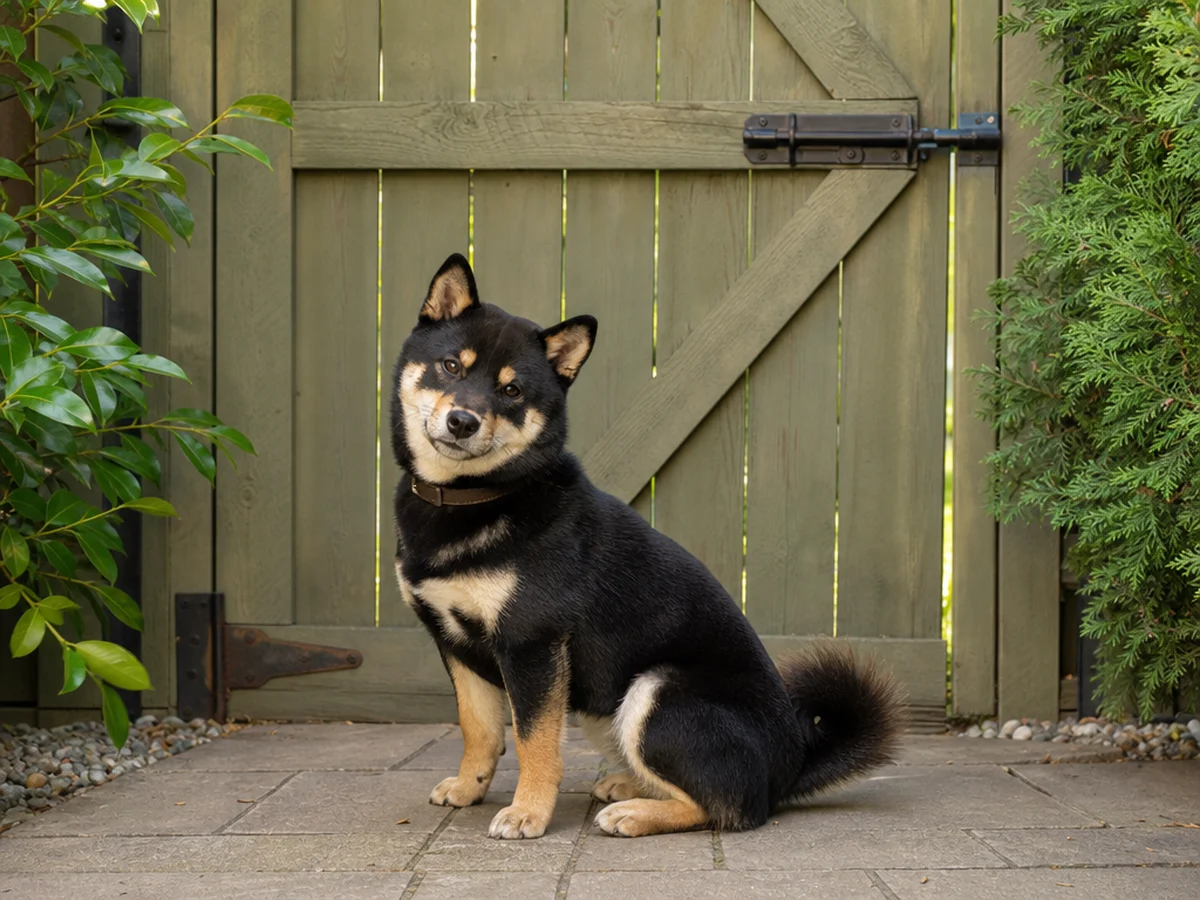
The UKC breed standard states that a Shiba can be aggressive toward other dogs and should remain under handler control. That does not predict every adolescent interaction. It supports managed distance and careful selection rather than assuming every dog encounter is required.
Children do not enforce adolescent rules. Adults manage doors, food, handling, and conflict while teaching children safe, simple boundaries. If the dog cannot be supervised with a child, separate them physically rather than asking either one to remember a complex training plan.
Keep regular vet visits and discuss abrupt behavior change, new sensitivity, limping, appetite change, or unusual fatigue. Growth and development do not explain every problem. A health concern should not be relabeled as a teenage phase.
The site's Shiba Inu training guide can support reward mechanics, but policy decides where those lessons occur. A sit practiced in the kitchen does not authorize freedom near an open exterior door.
Check equipment fit as the adolescent grows. A harness or collar that fit last month may shift differently now, while a lightweight gate that contained a smaller puppy may no longer be adequate. Policy remains fixed, but the hardware supporting it must keep pace with the dog.
Shiba Inu Privileges Can Shrink During the Teenage Months
A privilege is access the household can safely adjust without withdrawing basic care. Examples include roaming several rooms, greeting a visitor, choosing a longer sniffing radius, or resting outside a pen while dinner is prepared. Tie each privilege to current, observable behavior.
If counter investigation increases, reduce kitchen access while teaching a station outside the food area. If recall weakens, shorten the working distance and use a line. If the dog cannot settle during a guest visit, choose a prepared quiet room rather than repeating cues in the gathering.
Reducing a privilege is not a delayed consequence for something that happened hours ago. It is an immediate safety and learning arrangement. Restore access in small pieces when the dog can use it without constant interruption.
Do not remove exercise, social contact, rest, veterinary care, or opportunities to perform normal dog behavior as leverage. Those are needs, not prizes. A Shiba's daily outlets should remain appropriate even while a particular household freedom is temporarily smaller.
Track the condition for return in one sentence. “Two calm minutes behind the kitchen line while food is prepared” is clearer than “better behavior.” The sentence helps every adult recognize the same evidence and prevents privileges from depending on mood.
Privilege decisions should also preserve choice where safety allows. A dog resting calmly outside the kitchen can choose a bed or chew, while the boundary remains firm. Clear limits and ordinary dog agency can exist together without turning the rule into repeated cueing.
Training Expectations Change With the Shiba Inu
An expectation must name the setting. Coming when called in a quiet room, in the yard on a line, and near wildlife are three different tasks. When the adolescent struggles, reduce distraction, distance, or duration rather than repeating the cue at full difficulty.
Classes can provide coaching and controlled practice, but they do not make behavior universal. Ask whether the class uses reward-based methods and gives the Shiba Inu enough space to work without repeated social pressure.
Use rewards that fit the current competition. Familiar food may work indoors while sniffing, distance, or a more valued food works outside. The policy should permit reward value to change without turning every session into a negotiation after the cue has already failed.
End a session when the dog is disengaging repeatedly, not after several more unsuccessful trials. A short, useful lesson preserves information about what worked. It also avoids making the cue a background sound that follows the dog while they pursue something else.
Practice only one harder feature at a time. If the location is new, keep distance short. If the distance grows, keep distractions predictable. This is not returning to kindergarten because the dog forgot everything. It is teaching the skill under a newly difficult condition.
Include ordinary competence in the expectation list. Waiting for a leash, settling while groceries are put away, and moving through a hallway calmly can matter more than novel cues. These quiet skills give adolescence a stable daily rhythm.
Fear and Conflict Can Rewrite Teenage-Month Policy
An adolescent may become cautious about a person, object, sound, or place that was previously ordinary. Increase distance and allow observation without forcing contact. The policy should make retreat possible instead of treating avoidance as a challenge to authority.
PDSA's communication ladder explains that subtle signals can progress to growling, snapping, or biting when earlier communication does not work. Respecting the early signals helps the household act before the dog needs a louder response.
The ASPCA notes that a fearful dog may become aggressive when cornered in its aggression overview. Do not block escape to prove that a Shiba can cope. Create distance, secure the environment, and seek qualified reward-based help for repeated fear or aggression.
Policies must also change after a bite or serious near miss. Separate the dog from the triggering context, contact the veterinary team, and arrange professional assessment. Household experiments are not appropriate when risk has outgrown ordinary practice.
The site's guide to Shiba Inu puppy training separates play, fatigue, handling, and fear hypotheses. That distinction remains useful in adolescence, since visible mouthing or conflict can still have different functions.
After a difficult event, restore routine before testing the same context again. Sleep, predictable walks, and familiar low-pressure training give the dog a chance to recover. A rapid retest may measure lingering arousal rather than what the adolescent can learn under fair conditions.
A Shiba Inu Policy Review for the Teenage Months
Hold a short household review once a week. Bring one example of a rule that worked, one privilege that was too large or too small, and one training expectation that needs a fairer setting. The meeting is about the environment and plan, not a verdict on the dog.
| Policy area | Keep fixed | Adjust with evidence |
|---|---|---|
| Exterior safety | Secure barriers and leash | Practice distance and distraction |
| House freedom | Supervision around hazards | Number of rooms and duration |
| Dog encounters | Handler control and escape route | Distance, partner, and session length |
| Training | Clear cue and reward-based method | Reward, location, duration, and difficulty |
A weekly review prevents rules from changing during frustration. It also reveals when the dog has earned more room to choose. The family can expand one privilege while keeping all safety policies intact, then watch what happens before expanding another.
Record decisions in a shared place instead of relying on one person's memory. A simple note keeps a dog walker, sitter, or returning family member from unknowingly restoring an old privilege. It also shows when a restriction has remained only because no review occurred.
The Appeal Process Belongs to the Dog's Behavior
The dog “appeals” a policy through observable success, not through pleading or human guilt. Repeated calm use of a smaller space can support slightly more freedom. Reliable orientation on a short line can support practice a little farther away in the same environment.
If behavior deteriorates, return to the last workable version without drama. The policy was too difficult for that setting or day. That result does not erase learning, and it does not require the household to wait for another major incident before restoring support.
Write the next review date and the evidence you want to see. Avoid deadlines that promise the dog will be ready by a certain age. Development differs, and a safe policy can remain in place for as long as it continues to help.
Choose One Teenage-Month Policy Today
Pick the household moment creating the most confusion and write one sentence everyone can follow. It might be “The interior gate is latched before the front door opens,” “Dog greetings happen only after an adult chooses the distance,” or “Kitchen access begins after food is put away.”
Then make the physical environment support the sentence. Move the gate, prepare the leash, mark the boundary, or close the room before the difficult moment begins. A policy that depends on several warnings is not yet supported well enough.
Keep that one decision steady while training continues in fair settings. The teenage months are not a contest to see whether a Shiba Inu will obey every old rule under new pressure. They are the period when a household proves that safety, freedom, and learning can change at different speeds without becoming inconsistent.
 Puppy trainingShiba Inu Potty Training: Reward Every Success
 BehaviorShiba Inu Standoff With Your Cat: How to Teach Calm Coexistence
 BehaviorTraining an Independent Shiba Inu: Making Treats Worth the Effort