 Shiba Inu
You find a small puddle just beyond the kitchen doorway, and your Shiba Inu puppy is already investigating something else. The useful question is not why they were “bad.” It is what happened before the accident, when they last went outside, and which signal you missed.
A success log turns those details into a personal timeline. Record sleep, meals, play, trips, results, and accidents in plain language. In our training work, we usually find that the pattern shows when a puppy needs help before they can signal reliably.
This guide follows the log from the first trip through wider household freedom, calm setback handling, nights, and graduation. Reward completed outdoor elimination promptly, keep indoor supervision active, and adjust the plan to this puppy rather than a generic timetable.
Shiba Inu Potty Training First Trip
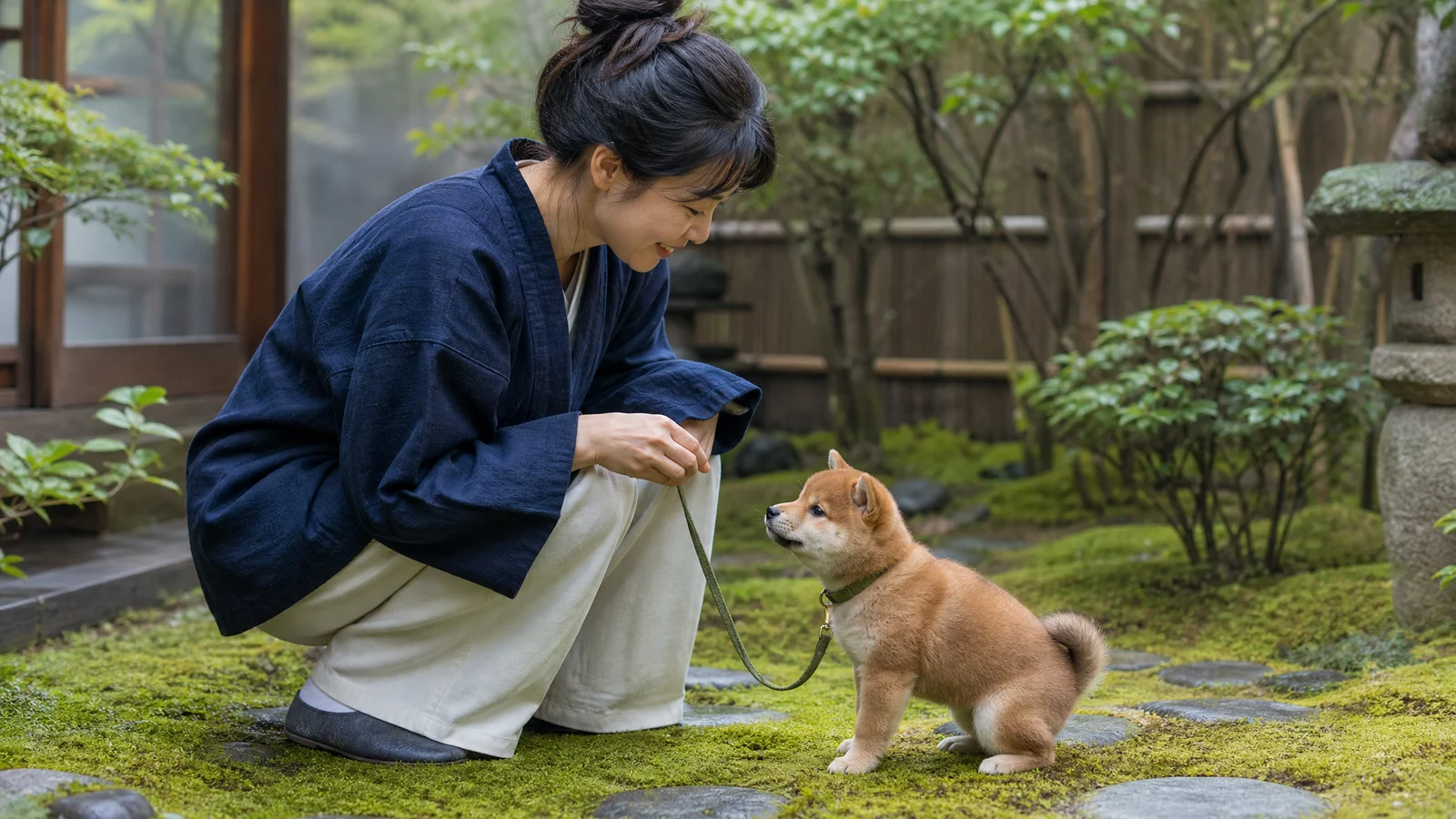
Choose one easy-to-reach outdoor area before the need becomes urgent, and walk your leashed puppy to that spot, settle your own movement, and give them a small sniffing radius without beginning a game. A consistent place reduces competing choices and gives the outing a recognizable beginning.
Say a simple potty cue once as the puppy begins, not repeatedly while they search. When they finish, mark the completed action with calm praise and deliver the reward immediately. House-training guidance supports rewarding as soon as the puppy has finished.
Reward timing matters more than excitement, and paying after you return indoors can teach that entering the house earns food, while loud celebration may interrupt a puppy before they are done. Stay quiet during the action, then make completion worthwhile at the outdoor spot.
- Log the time you went outside.
- Note what happened just before the trip.
- Write whether the puppy eliminated and which type.
- Record the reward and whether the puppy wanted it.
Your first entry might read, “Woke from a nap, went to the yard, urinated, accepted praise and food.” That sentence is evidence you can use. It connects an event to an outcome without pretending one trip establishes a permanent schedule.
Shiba Inu Potty Training First Day
The first day should contain more opportunities than tests, and take the puppy out after waking, eating, drinking, active play, and time in a confined rest area. Also watch for sudden sniffing, circling, leaving an activity, or moving toward a previous accident spot.
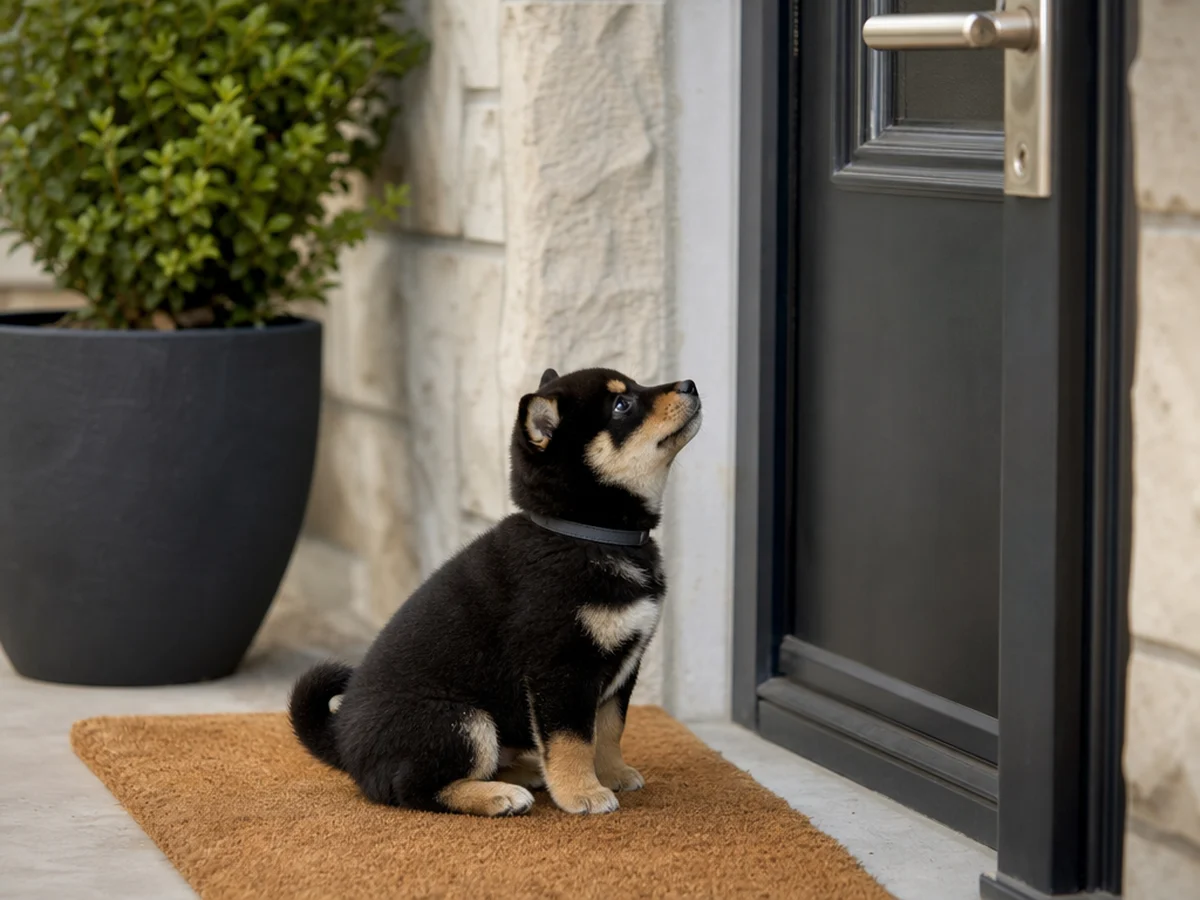
Puppy toilet guidance recommends frequent early trips and outings around predictable events. It also notes that calm praise may be enough for some dogs. The brief contains differing source advice on food rewards, so observe whether praise, a treat, or brief outdoor access best reinforces your puppy without creating frantic offering. The log reveals which version supports this puppy's cleanest response.
Active supervision keeps the puppy's posture and movement in view throughout the room, even while you complete another simple task, and use gates, a leash held or safely tethered to you when appropriate, or a small puppy-proofed zone so early signals remain visible. Confinement should be comfortable and brief, never a punishment for an accident.
Keep the route outside efficient, and shoes, leash, rewards, and cleanup supplies should be ready before the puppy wakes. A delayed departure can turn a predictable success window into an indoor miss, especially when the puppy has just slept or played.
At the end of the day, circle successes rather than counting only accidents, and the log should reveal which event-linked trips worked and where supervision broke. That information sets tomorrow’s plan more accurately than a generic age-based calendar.
House Training Reveals the Puppy Pattern
After several days, group entries by what happened immediately before the trip. Wake-ups may show one pattern, play another, and meals another. Look for repeated sequences rather than a single lucky gap. Your puppy’s actual record should lead any decision to wait longer.
Age affects physical capacity, but formulas are rough planning aids rather than guarantees, and humane guidance offers an hour-per-month estimate and notes that full house training may take several months. Individual development, activity, intake, sleep, and health can make the safe interval shorter.
Build a forecast from the strongest signals, and if the log repeatedly shows elimination soon after active play, schedule the trip as play winds down. If wake-ups are urgent, carry or guide the puppy directly to the chosen place before greeting, feeding, or opening the rest of the house.
- Highlight the events that preceded outdoor successes.
- Mark accidents that occurred before a planned trip.
- Move those planned trips earlier.
- Keep the new timing until several entries show comfort.
This is a feedback loop, not a race to stretch intervals. A blank result outside does not prove the puppy can wait. Return indoors under close supervision, then try again after a short, calm pause. Freedom should not expand during that uncertain window.
The national breed club emphasizes consistent training and says most Shibas will work for treats. Consistency here means the same route, completion marker, and response to signals. It does not mean every Shiba puppy follows the same clock.
Shiba Inu Potty Training Expands Freedom
Household freedom should grow from recorded reliability. Begin with one easy-to-supervise room after a successful outdoor trip. Keep the puppy near you, provide an appropriate activity, and return outside when the next event or signal appears. Open space is earned in small, reversible pieces.
Add one area only after the current area has a stable run of successes, and close doors to unused rooms and block access behind furniture where signals are hard to see. More square footage increases the distance to the exit and gives a puppy quiet places to make an unnoticed mistake.
A crate or pen can support rest and supervision, but it does not create bladder capacity, and the space should be introduced with comfort and rewards, and the puppy still needs prompt trips after waking. If they regularly eliminate in confinement, review the schedule, space, and health rather than assuming spite.
Use the log to distinguish supervised freedom from unattended freedom. “No accident under close adult supervision after an outdoor success” is different from “reliable while I showered.” Increase only one challenge at a time, such as room size, time, or distance from you.
A reliable period should feel ordinary. The puppy plays, rests, and signals without frantic rushing to the door. If you are repeatedly interrupting near misses, the current freedom is too large even when the floor remains clean. Step back before the pattern turns into rehearsal.
Potty Training Reads an Accident Calmly
If you notice an accident in progress, interrupt gently only if you can do so without frightening the puppy, then move outside. Reward if they finish there. If you discover it later, clean it and update the log. The puppy cannot connect delayed punishment with an earlier bodily event.
Humane training guidance recommends teaching wanted behavior with rewards and without fear, intimidation, or pain. For house training, that means arranging more outdoor success and removing the odor cue indoors, not making the puppy afraid to eliminate near you.
Use an appropriate enzymatic cleaner according to its label, and keep the puppy away while the area is treated, and ordinary scent may remain even when people cannot detect it. Blocking the location temporarily can prevent a repeated indoor habit while your schedule improves.
- What event came before the accident?
- Was the planned trip late or missed?
- Was the puppy outside but too distracted to finish?
- Did frequency, comfort, thirst, or stool quality change?
The final question is a reason to observe health, not an explanation you can settle at home, and sudden frequent urination, straining, pain, blood, marked thirst, diarrhea, or a sharp regression should prompt veterinary advice. Keep the notes and share them, because timing and associated signs can help the veterinarian understand the change.
After a management miss, shorten the interval and reduce freedom, and this is not a demotion. It restores the setup that worked and lets the puppy repeat it.
Shiba Inu House Training at Night
Nighttime planning starts with the last entries of the day. Offer a calm outdoor trip after evening activity and again just before sleep. Keep the route boring and familiar, with a quiet reward after completion. The goal is elimination and return to rest, not a stimulating midnight adventure.
Young puppies may not be able to remain dry all night, and set the sleeping area close enough that you can hear stirring, and respond before vocalizing escalates. A brief, leashed trip with low lights and little conversation separates a genuine need from a play invitation.
Do not force a puppy to soil their sleeping area in pursuit of a schedule. If the log shows a repeated nighttime need, plan an earlier trip and adjust gradually as dry stretches lengthen. Development should determine the change, not impatience.
If the puppy wakes but does not eliminate, return to the sleep area calmly and observe. Repeated restlessness can reflect temperature, noise, discomfort, or another need. Persistent changes deserve veterinary discussion, especially when paired with urinary or digestive signs.
Morning begins with a direct trip outside before household excitement. Log the result, then start breakfast and play. That entry anchors the new day and prevents the busiest transition from becoming the least supervised part of the timeline.
Potty Training Grows Into Reliability
Reliability is a pattern across different days, not one long dry stretch. Your puppy should succeed after sleep, meals, play, and quiet time, in the rooms they are allowed to use. They should also recover from a schedule disruption without immediately losing the skill.
Lengthen time or expand space in small increments, never both together. Keep event-linked trips even when clock intervals grow, because activity can create need sooner than a quiet nap. Continue rewarding outdoor completion, then vary the reward gradually after the habit is strong.
A regression means returning to useful data. Restore closer supervision, shrink the accessible area, and move trips earlier. Review whether travel, visitors, weather, a changed door, or a new surface altered the picture. Contact your veterinarian when a new pattern appears abruptly, persists, or is accompanied by physical signs.
- Several ordinary days show consistent outdoor success.
- The puppy remains comfortable between planned trips.
- Signals are noticed before urgency becomes an accident.
- Added freedom does not reduce reliability.
Those criteria support the next small experiment. They do not mean the log must disappear. Keep a lighter record during transitions such as a new room, a changed routine, travel, or adolescence. Written patterns can expose drift before it becomes confusing.
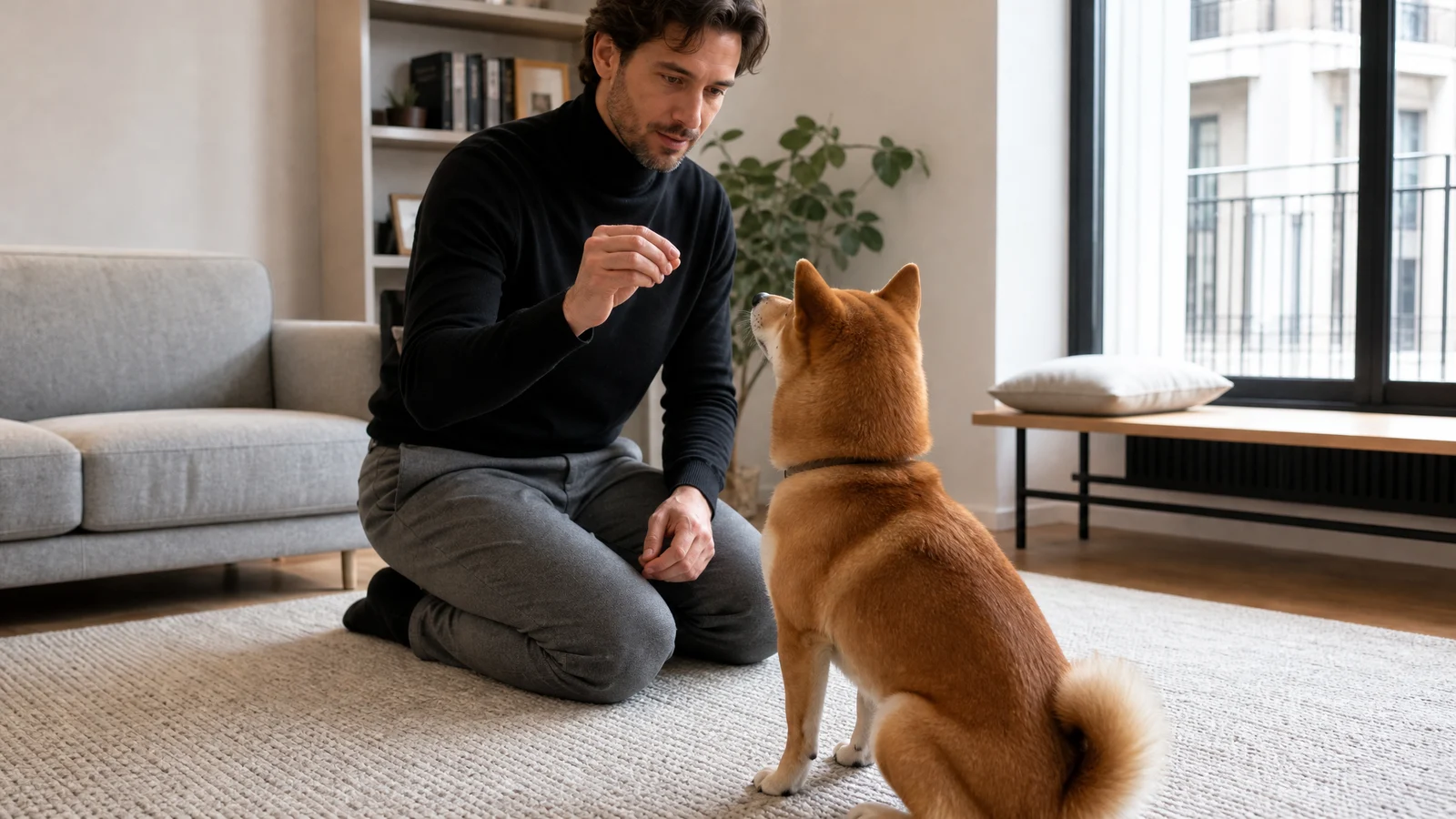
For reward timing and early cue mechanics, the Shiba Inu training home tour connects the same principles to other skills. Potty training is not separate from learning. Clear setup, immediate consequences, manageable difficulty, and consistency do the work.
Keep regular veterinary visits in your puppy's routine, and bring the log when elimination patterns change abruptly or physical signs appear. A veterinarian can evaluate health concerns, while your dated entries preserve details that are easy to forget.
Leave one blank line for tomorrow: event, trip, result, reward, and next adjustment. Fill it after a real observation rather than predicting perfection tonight. A growing set of successful entries is the timeline that matters, and it belongs to this individual puppy.
 BehaviorShiba Inu Standoff With Your Cat: How to Teach Calm Coexistence
 BehaviorTraining an Independent Shiba Inu: Making Treats Worth the Effort
 Training basicsShiba Inu Intelligence Ranking: Clever but Not Compliant