 Shiba Inu
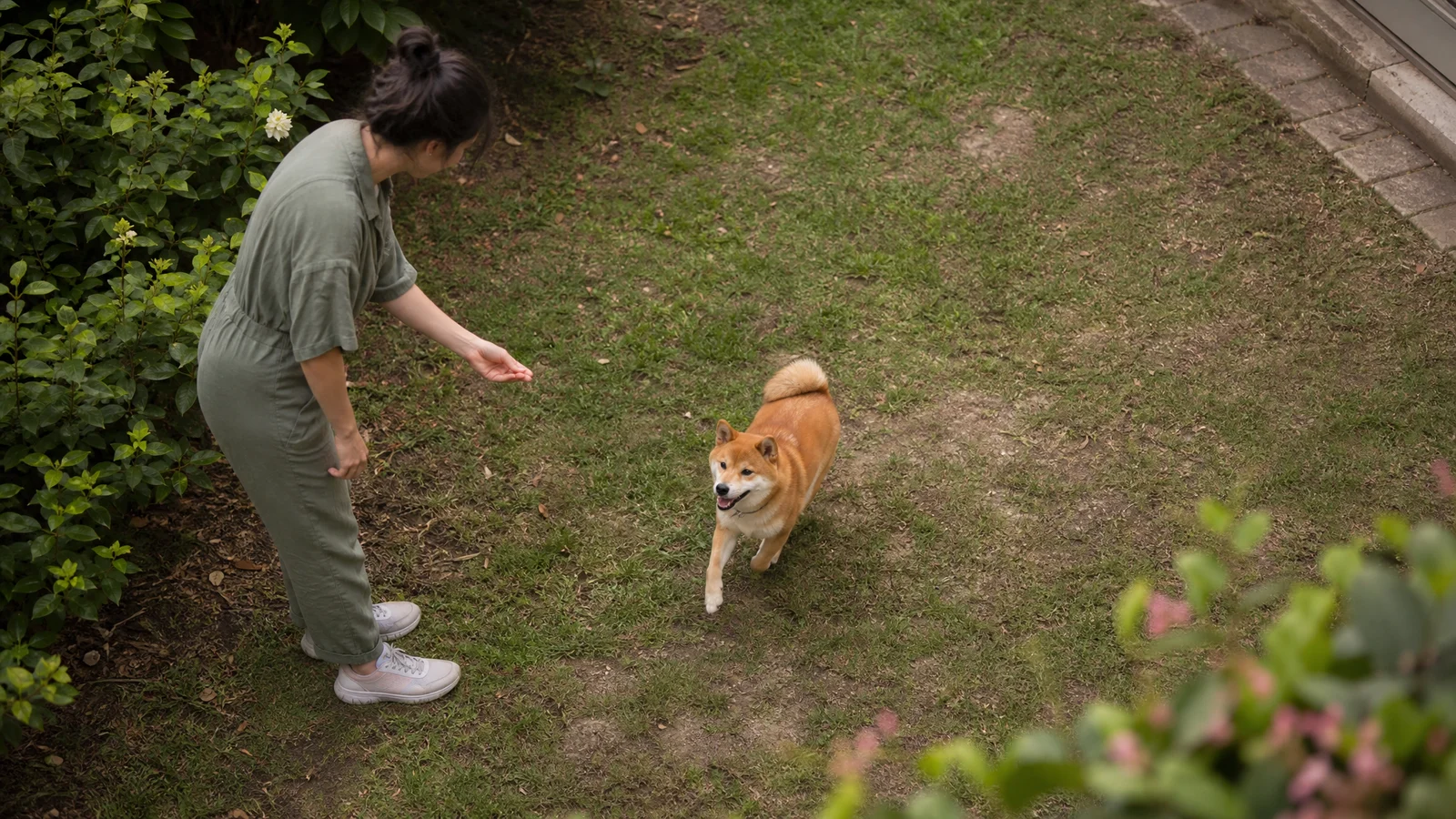
Is your Shiba Inu hard to train, or did one lesson ask the wrong question? That distinction matters when a dog performs a cue in the kitchen and seems not to hear it near the front door. Calling the second response stubborn may feel tidy, but it hides the variable you can change.
The familiar trainability score of 2 out of 5 describes a broad breed tendency, not an obedience ceiling. Official standards describe independence, and the national club calls the breed very intelligent. Neither statement predicts how your individual dog will respond to tonight’s reward, setting, or cue.
Use this scorecard on one recent training miss. Below, you'll find separate scores for the signal, payment, setting, duration, practice history, readiness, household rules, and sudden change. The audit table then turns those observations into one fair retest. The goal is not a perfect score. It is a specific answer about what made cooperation difficult and which small adjustment should come next.
Training Score One Checks Cue Clarity
A cue is clear when it has one sound, one meaning, and a history of being followed by an achievable action, and if “come” sometimes means touch your hand, sometimes means enter the house, and sometimes ends outdoor fun, the dog faces several possible answers. That is a teaching problem before it is a motivation problem.
Review your own delivery. Did you say the word once while the dog could respond, or repeat it as they investigated something else? Repetition can turn a crisp signal into background sound. Wait for a workable moment, give the cue once, and simplify if the answer does not begin.
Hand signals can also drift. A sit gesture may begin near your waist and gradually become a raised arm or a reach over the dog’s head. Choose one version and rehearse it in an easy room. Clear pictures let you evaluate the learner rather than your moving target.
Training Score Two Measures Reward Value
A reward must matter more than the immediate alternative. Dry food might purchase a sit before breakfast, yet fail beside a scent trail after dinner. That change does not prove the dog forgot. It shows that value belongs to a moment, and the environment is bidding too.
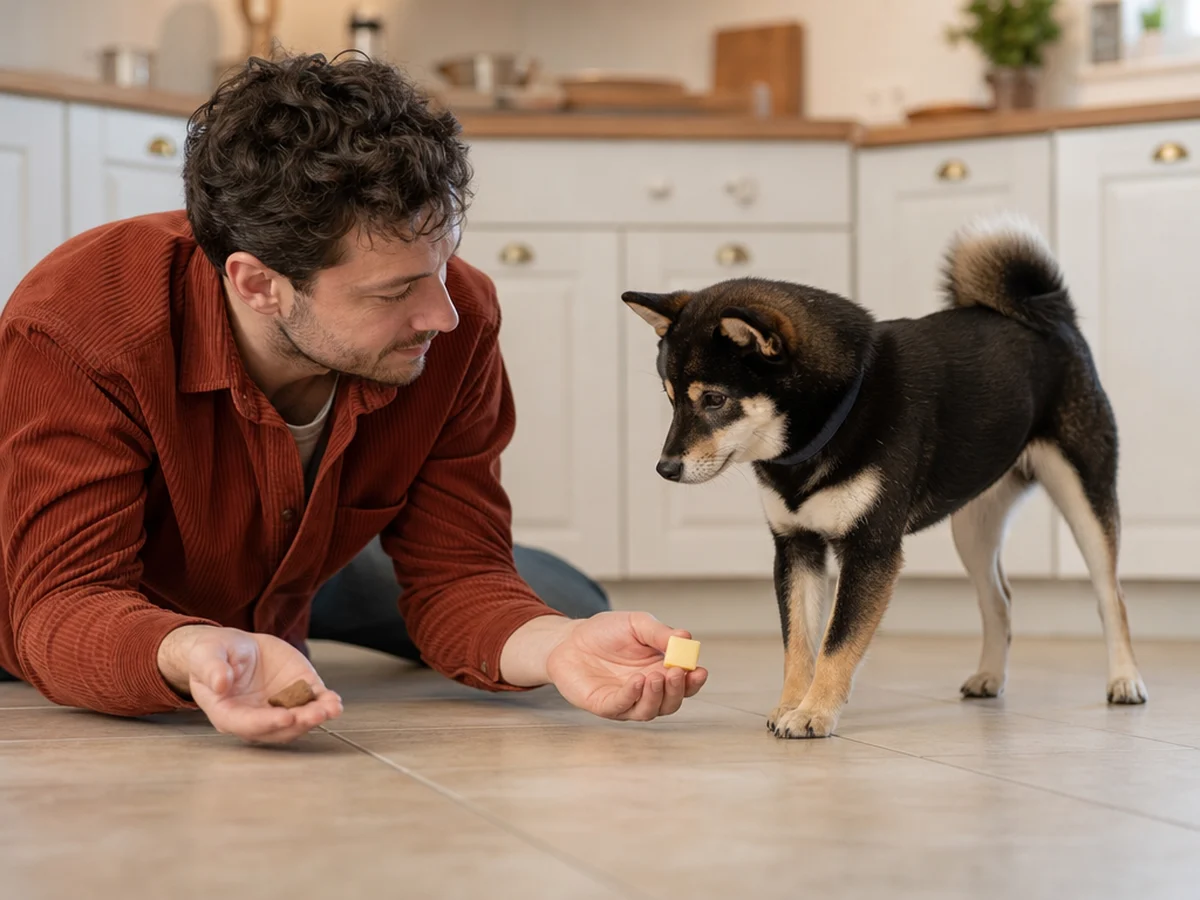
Create a small reward ladder, and use ordinary food for familiar indoor behavior, a preferred soft treat for new work, and an exceptional option for demanding places. Play, permission to sniff, and movement toward a destination can also pay, provided the dog wants them then.
The national breed club says most Shibas will work for treats and need consistent training. Read “most” as useful guidance, not a guarantee. Watch what your dog chooses, because individual preference is the score that determines the next repetition.
Training Score Three Tests a Fair Setting
Learning has to survive a gradual change of scenery. A quiet living room contains few competing sounds, movements, and smells. A sidewalk presents all three at once. Asking for the same response in both places without intermediate practice changes the assignment more than the cue suggests.
Lower one dimension at a time. Increase distance from the distraction, choose a quieter hour, or move behind a visual barrier. When your dog can eat, orient, and perform an easy behavior, the setting is probably workable. If those basics disappear, find a simpler edge.
Independence does not excuse an impossible setup. The UKC description recognizes an independent nature and reserve toward strangers. A fair plan respects that context by creating room to think rather than demanding performance in the middle of unwanted social pressure.
Training Score Four Reviews Session Length
A productive session can end before the treat pouch is empty, and look for the point where responses slow, sniffing increases, or your dog takes food and leaves. Those changes may mean fatigue, satiation, confusion, or simply that the exchange is no longer worthwhile.
Count successful repetitions instead of minutes. Three clean turns toward you may teach more than a long run that ends in repeated cues. Pause for ordinary life, then return later with a fresh setup. Short work also makes it easier to remember exactly what changed.
Ending well is part of the lesson, and use a consistent release, scatter a few pieces to sniff out, or invite a calm break. The dog learns that cooperation has a predictable finish, and you avoid squeezing one more attempt from a learner who has already answered.
Hard-to-Train Audit for a Shiba Inu
Now put the four scores beside the actual miss, and describe what happened without labels: which cue you gave, what the dog was doing, what you offered, and where you stood. Observable details reveal a repair, while “defiant” gives you nothing to test.
| Observation | Likely audit line | Fair next test |
|---|---|---|
| The cue worked indoors but not by the door | Setting | Practice several feet from the closed door |
| The dog looked over, then returned to sniffing | Reward | Increase distance and offer a better payment |
| The first responses were quick, then slowed | Duration | End after the early clean repetitions |
| Different family members use different words | Clarity | Agree on one cue and one hand signal |
- Write what the dog did without interpreting motive.
- Choose the score most directly tied to that observation.
- Change only one condition in the next short test.
The table identifies a leading possibility, not a final conclusion. Two lines can be weak at once. A low-value reward in a difficult setting is common, and changing both would hide which adjustment mattered. Choose one variable for the first retest.
Controlled Training Retest
Recreate an easier version of the moment and keep everything else stable, and if setting is your target, use the same cue and reward at greater distance from the distraction. If value is your target, stay in the same easy place and change only the payment.
Give a handful of opportunities, then stop. Record whether your dog oriented, began the behavior, completed it, and returned for another turn. A partial improvement still teaches you something. It may show that you found the right variable but need a smaller step.
Do not keep retesting until you obtain the answer you wanted. An honest audit includes “not enough information.” Rest, meet ordinary needs, and try on another day before deciding that the cue or reward is broken.
Training Score Five Checks Location Practice
Dogs do not automatically apply a lesson everywhere, and a sit learned in front of the refrigerator may depend on that floor, your posture, and the visible food container. Moving to a rug, turning sideways, or hiding the food can make the picture genuinely new.
Generalization is a training stage, not proof of obedience, and practice the same cue in several easy rooms, with small changes in your position and the dog’s starting point. Reward generously when the response travels, because flexibility is a skill you are building.
Then change one environmental feature. Work near a closed door before an open one, or in a quiet yard before a sidewalk. The progression may feel slow, but it replaces surprise with a record of success. That record is what eventually supports a response in daily life.
Shiba Inu Training Score Six Reads Readiness
Readiness varies across a day. A dog who needs to eliminate, rest, move, or recover from an exciting event may not be available for fine learning. Meeting those needs is not giving in. It creates the physical and emotional conditions in which information can land.
Watch the whole dog before starting, and comfortable movement, normal interest in food, and the ability to disengage from the room suggest a reasonable opening. Persistent scanning, withdrawal, frantic movement, or refusal of a normally valued reward calls for distance, rest, or a different plan.
Consent can be practical. Offer the familiar starting station or target and see whether your dog joins you. If they leave, do not block the exit or follow with repeated cues. Make a note and invite them later, when the lesson can again function as a choice with worthwhile consequences.
Household Training Score Seven Finds Consistency
Consistency means that the same cue predicts the same opportunity, not that every person must sound identical, and write down the word, hand signal, marker, reward placement, and release for the skill you are auditing. That small agreement prevents a dog from solving several conflicting versions.
House rules need the same clarity. If jumping earns attention from one person and receives silence from another, the behavior is being rewarded on an unpredictable schedule. Teach an alternative such as four paws down, and make that choice pay across the household.
The scorecard should follow the humans as carefully as the dog. The Shiba Inu intelligence dossier helps separate a learning problem from a motivation problem before the household changes its shared plan.
A shared note can show who practiced, where it occurred, and what worked. We usually find that a written cue agreement resolves more confusion than adding extra repetitions to an inconsistent household pattern. The Shiba Inu first-lesson tour organizes those early choices without turning home life into constant drilling.
Shiba Inu Training Score Eight Notices Change
A stable skill that changes abruptly deserves a different audit from a new cue. If an adult dog suddenly hesitates to sit, avoids stairs, startles at touch, or seems unable to hear a familiar signal, do not assume the breed’s independent nature has intensified. Behavior can reflect comfort and health.
The behavior change guidance from veterinary behavior professionals notes that an unexplained personality change can be an early sign of a physical issue. Record what changed, when it began, and what movements or contexts accompany it.
Pause exercises that appear uncomfortable and contact your veterinarian about an abrupt or persistent shift. Keep regular veterinary visits as part of your dog's routine, since behavior observations belong beside ordinary preventive care rather than replacing it. Training can continue in comfortable ways if your veterinary team agrees, but it should not be used to push through pain, sensory loss, or confusion.
The final score should improve in observable ways. Look for these changes before raising difficulty:
- faster orientation after one clear signal
- more willing returns for another repetition
- fewer moments when anyone repeats the cue
A better scorecard produces faster orientation, more willing repetitions, and fewer occasions when you repeat yourself. It also tells you when ordinary adjustments are not enough. Seek a qualified reward-based trainer when you cannot find a workable starting point, and seek veterinary advice when the shift arrives without explanation or seems tied to comfort.
The 2-of-5 label is context, not destiny. Your useful score is the one you can change: clearer signals, fairer settings, better payment, shorter work, and a learner who is ready. Audit one miss, run one controlled retest, and let the evidence choose tomorrow’s lesson. A Shiba who improves after a fair adjustment has not changed personality. The lesson has finally made the useful answer easier to see and worth choosing.
 CareShiba Inu Nails and Vet Visits: Building Trust With Touch
 Training basicsShiba Inu Door Dashes and Gate Escapes: Rewarding the Check-In
 BehaviorLetting a Shiba Inu Greet Guests on Their Own Terms