 Shiba Inu
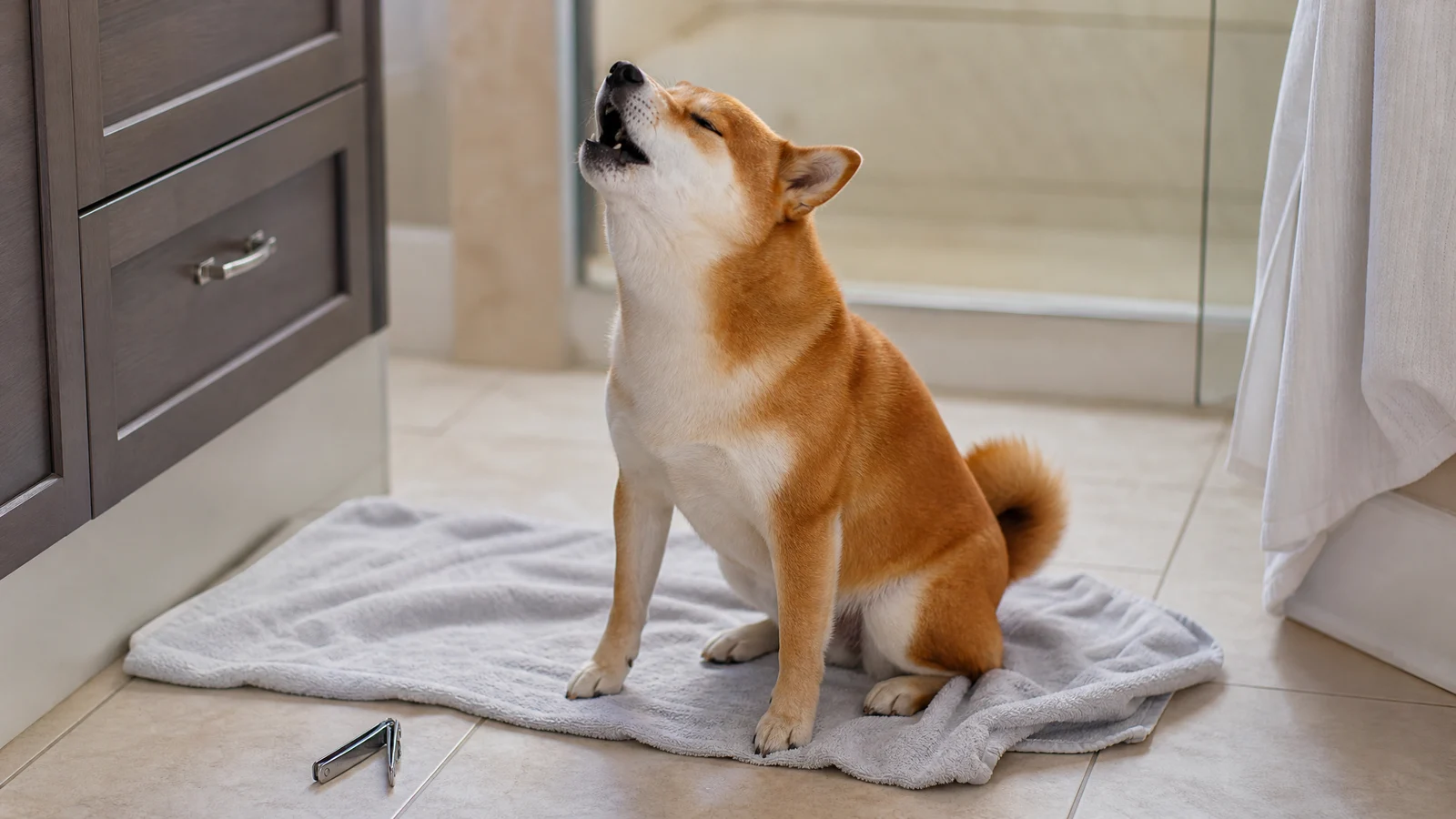
A Shiba Inu scream is a normal, dramatic protest or fear signal, and reward-based handling practice can reduce it once pain has been ruled out. This bold, independent breed turns restraint into theater, which is why a dog who happily splashes through rain and puddles can shriek as if injured the moment you run a bath.
The stakes are practical. Owners who react to the noise often drift into skipping baths, grooming and handling altogether, and a Shiba who never practices calm handling gets harder to care for every year. Done well, the same dog learns that quiet is what makes hard things end, a trade this clever breed will happily make.
Below, you'll find how to tell pain from protest and how to pick a single trigger to work on, including which calm behavior to reward and how to rehearse baths and vet visits in small pieces.
Sorting Pain From Protest Before Training a Screaming Shiba Inu
The first decision comes before any treat leaves your pocket, and it is whether you are hearing pain or protest. The two can sound alike, because a sturdy, muscular Shiba with a spirited boldness may shriek at full volume over a mild indignity and stay oddly quiet about a real injury. Volume tells you little, and context tells you a great deal.
Protest and fear follow the situation. Many owners see the scream begin the instant water touches the coat, and some dogs show panic before the bath even starts, with shaking, trembling, clawing at the tub, or clinging to an arm.
Notice too that a Shiba who fights the tub often seeks out rain, puddles, sprinklers and mud. The objection seems to be to being held and soaked rather than to water itself, which is exactly the kind of problem rewards can solve.
Pain follows the body instead, and these signs mean a vet visit comes before any training.
The first sign is a scream that happens when one specific spot is touched or one particular movement is made, rather than across many kinds of handling. Your Shiba may also yelp with no handling at all, such as when jumping, climbing stairs or getting up. Watch for limping, stiffness, reluctance to be lifted, or a change in appetite or energy, and for a kind of handling they used to accept that has suddenly become intolerable.
A pattern that moves with the situation, screaming in the tub but not on the sofa, points toward protest, while a pattern that follows one body part points toward pain. Keep regular vet visits on the calendar either way, since a sore dog cannot rehearse calm handling no matter how good the treats are.
This is general information, not a diagnosis. If you suspect pain or illness, check with your veterinarian before starting handling practice, and ask them before introducing any new food as a training aid.
So the first choice is simple: rule out pain first, describe to your vet exactly when the scream happens, and let a clean exam send you on to training.
Which Moments Trigger Your Shiba Inu's Scream?
For the next several days, keep a plain log of every scream, because this breed's stress can be specific to certain kinds of handling. A dog may panic in the tub yet accept other care, or object to one kind of touch and not another. The log shows you which kinds of handling your dog objects to.
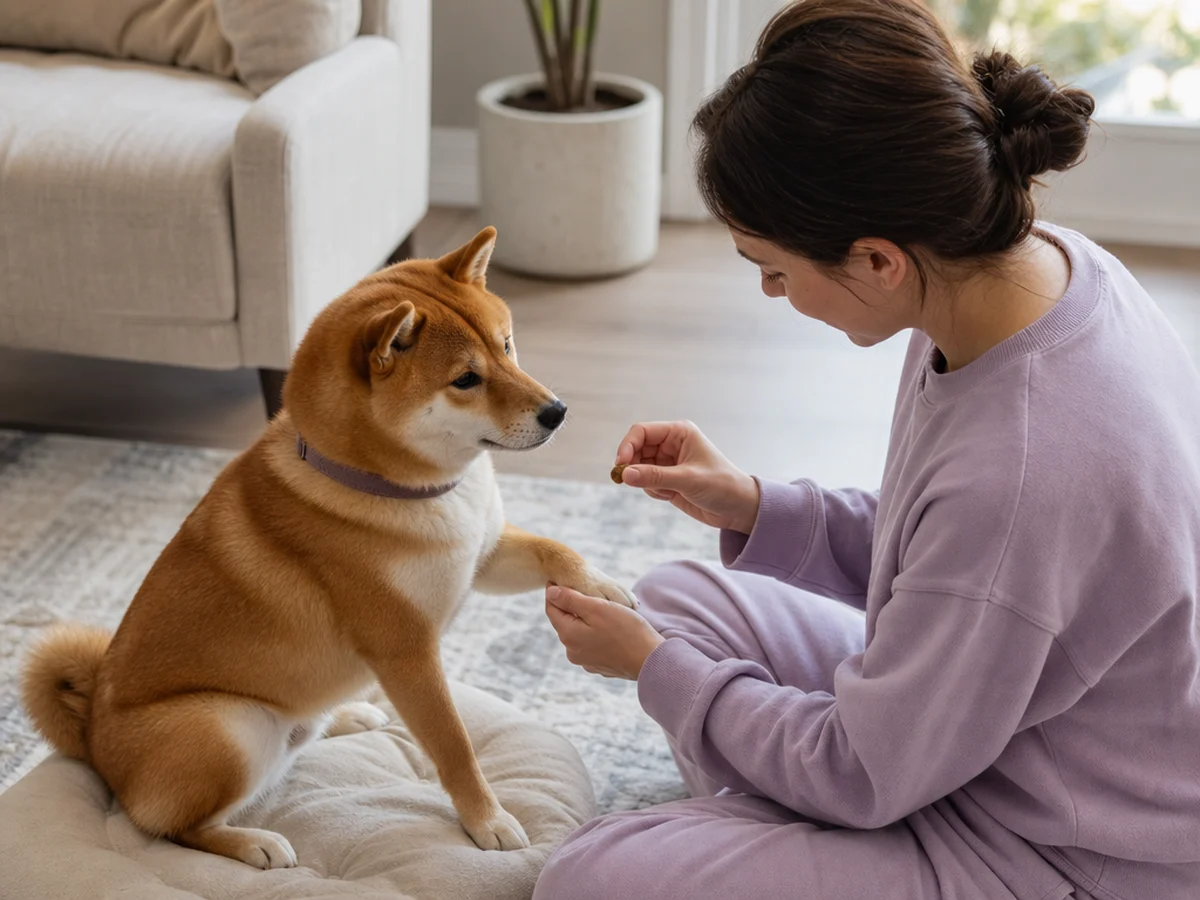
Write down the moment, the place, who was holding the dog, and what came just before. Look especially for early signs, since some Shibas shake with anxiety when bathing is attempted and some run from or bark at the harness. That early warning is the best moment to step in.
These are the moments owners report most often, with what to note for each:
| Moment | What to note |
|---|---|
| Bath | Whether the scream starts at the first touch of water or earlier, and whether the rear and undercarriage are the worst part. |
| Vet exam | Whether trouble starts in the car, the waiting room or on the table. |
| Nail trims and paws | Whether the scream begins at the paw touch or only when the clippers appear. |
| Harness, collar or clothing | Running away, barking when it is mentioned, or flat refusal to wear it. |
| Lifting and cuddling | Whether the protest starts at being picked up or at being held in place. |
| Brushing and dryers | Which tool upsets them, since a blow dryer is often scarier than a brush. |
Walks belong in the log too. Leash pulls or leg nudges can bring on a protest, with the dog plopping down or nipping, and some Shibas flee the harness yet still love the walk itself. That mix is useful, because it tells you the dog is not rejecting outings, only the handling that comes with them.
Now pick one. The best first trigger is usually the one you meet most often and that draws the mildest reaction, such as the harness or a single nail, rather than the full bath, because an easy win shows both of you how the method feels. Choose a single starting trigger, write it at the top of the page, and leave the others alone until it has become boring.
Choosing a Calm Behavior to Reward in Training
With a trigger chosen, decide what you want your Shiba to do there instead of screaming, because a dog can only be rewarded for something they are actually doing. A calm behavior works as a replacement since it cannot happen at the same moment as a shriek, and several candidates suit this breed.
- Standing still is the most useful default for the tub, the exam table and nail trims, since it is the posture that makes handling possible.
- A chin rest, where the dog parks their chin in your palm or on a folded towel, lets you steady the head for ears, eyes and mouth as a choice the dog makes.
- A settled mat gives the dog a spot to stand or lie on calmly, and the same mat can later travel to the bathroom floor or the clinic.
Match the behavior to the trigger. A dog whose trouble is the tub needs standing still on a non-slip surface, a dog who flinches at hands near the face needs the chin rest, and a dog who unravels in busy places needs the mat.
Because the Shiba is independent, offer the position as an invitation and let them leave if they truly want to, since a dog who can walk away stays far calmer than one who feels pinned.
The reward then has to beat the urge to object, and for a bold dog this usually means something better than kibble. The parent club says most Shibas will work for treats, and handing a dog a food or toy they love makes the behavior more likely to come back. Choose a soft, strongly scented treat, save it for this practice alone, and say a marker word the instant the position is held so the dog learns exactly what earned the food.
Keep these sessions short and lively, because a clever breed with a real need for mental work tires of repetition faster than of treats. Write your choice next to the trigger now: one behavior, one marker word, and one treat, such as standing still on a mat for small pieces of soft, savory meat.
Handling Practice and Training for Baths and Vet Visits
The method is the same wherever the trigger lives. Split the handling into steps so small that your Shiba never reaches the point of screaming, and pay at every step, which is the logic behind small rewarded steps in any good plan. A workable ladder looks like this:
- Touch: rest a hand on the shoulder or back for a moment, mark the calm, and treat.
- Hold: lengthen the contact slightly and add a gentle hold, always releasing before any tension shows.
- Tool present: let the towel, brush, clippers or shower head sit nearby or in your hand, unused, while treats flow.
- Tool in use: touch the body with the tool for a heartbeat, then take it away and treat.
- Short duration: stretch the time a little at a time, raising only one thing per session.
When a step goes badly, return to the one before it and rebuild from there.
Home Practice for the Tub
Because the scream seems to be about restraint and soaking, begin with a dry tub and treats on the edge, reward stepping in, then standing, then a trickle of lukewarm water on one leg. More hands and tighter holding only confirm the fear, so rebuild gradually instead.
A quiet bathroom at home also beats a busy dog wash, where a chorus of protesting Shibas and constant apologizing to strangers makes calm handling harder to practice. A groomer is a reasonable choice for the coat, but it will not teach calm, so keep the home practice going.
Owners report that a few things help dogs cope, and we add one suggestion of our own at the end of this list.
Something lickable on the tub wall gives the mouth a job while the body gets wet, and showering yourself at the same time can make the bathroom feel like shared routine rather than an ambush. A spell of steady, repeated habituation works for some dogs where one dramatic bath never does. Leaving the rear and undercarriage for last, and keeping them brief, helps dogs who tolerate the rest but object to being rinsed there.
Treat each grooming tool as its own step, since different tools can upset a dog differently.
Rehearsing the Vet Visit
The clinic stacks up everything this breed dislikes: strangers, restraint, slippery tables and no exit. Shibas are accepted as aloof with strangers, so aim for calm tolerance rather than friendliness. Leave the carrier open at home with treats inside, take car trips that end with a treat at the clinic door and a ride home with no exam, and ask the staff to feed treats while they look at ears, paws and mouth.
Plan the waiting room, too. Shibas can be touchy with other dogs and should stay under your control, so wait in the car until the room is ready or sit well away from other animals. If a muzzle might ever be needed, muzzle-train with rewards first, since putting one on an untrained dog is likely to scare them and make every later attempt harder.
Whatever the setting, stop each repetition one step before your Shiba would object, so the treat always lands on a dog who is still doing well.
Does Waiting Out a Shiba Inu Scream Work?
Sooner or later a scream will start in the middle of a rep, and you will have to decide what to do with it: wait it out, soothe the dog, or stop. Each has a pull, and each has a way of backfiring with this breed.
Giving in backfires fastest. When the scream ends the bath, opens the door or makes the harness vanish, a clever and independent dog has just found their most efficient tool, and the next scream arrives sooner and louder. Pushing through backfires differently, because tighter holding and more hands confirm that handling is dangerous, and a dog in full panic learns only to fear the next attempt.
Why Plain Waiting Falls Short
Plain waiting does not work well either, since a bold Shiba can outlast most owners and silence alone teaches nothing. Coaxing talk is kinder but blurry, because an excited voice can end up accompanying the scream like a cheer.
What works is a calm pause. Stop the activity, ease off any hold, stand quietly beside the dog, and wait for even a breath of silence. Mark that moment, reward it, and return to an easier step the dog can do calmly. This mild, reward-compatible consequence matches the view that training of every kind, including behavior problems, should rely on reward-based methods.
We have spent many years on this breed's behavior, and the pattern holds: Shibas stop screaming when screaming stops paying and calm starts to. If a dog is truly panicking, with clawing and trembling, end the session safely and quietly, and simply make the next try much easier. Pause, reset, and make the next step easier, every single time.
Your Two-Week Training Plan for a Quieter Shiba Inu
This plan puts the earlier decisions into a calendar, starting with the vet check and ending with a first mock bath or mock exam. Keep every session brief, pay well, and drop back a step whenever the dog objects.
Week one is for the vet check and the easiest handling steps:
- Day 1: book the vet check, and describe when the scream happens.
- Day 2: review your log, pick one trigger, and settle on the calm behavior, marker word and treat.
- Day 3: practice the touch step at the chosen spot, mark and treat each calm moment, and stop while the dog is relaxed.
- Day 4: add a brief, gentle hold and release before any tension shows.
- Day 5: bring in the tool, whether harness, towel, clippers or brush, and leave it present but unused while treats flow.
- Day 6: repeat the easiest step in a different room, or leave the carrier open with treats inside.
- Day seven: rest from handling and enjoy an easy leashed walk.
Week two is for adding duration and rehearsing the real trigger:
- Days eight and nine: use the tool briefly, then lengthen the time a little each session.
- Days 10–11: run a dry-tub session with treats and something lickable, then add a trickle of lukewarm water on one leg.
- Day twelve: visit the clinic for a treat and a weigh-in, with no exam.
- Day 13: rehearse the real trigger in miniature, such as a mock bath with a damp cloth or a mock exam with a helper, rewarding calm throughout.
- Day 14: review your log, note which steps held, and repeat the weakest one.
Your Shiba may never love the tub, and that is a perfectly good result. A quieter dog comes from small rewarded wins stacked on one another, until the bold, independent animal who once screamed to end the hard thing discovers that staying calm ends it sooner.
 Training basicsHow to Train Your Shiba Inu With Rewards
 Training basicsIs Your Shiba Inu Hard to Train? The 2 of 5 Score Explained
 CareShiba Inu Nails and Vet Visits: Building Trust With Touch