 Shiba Inu
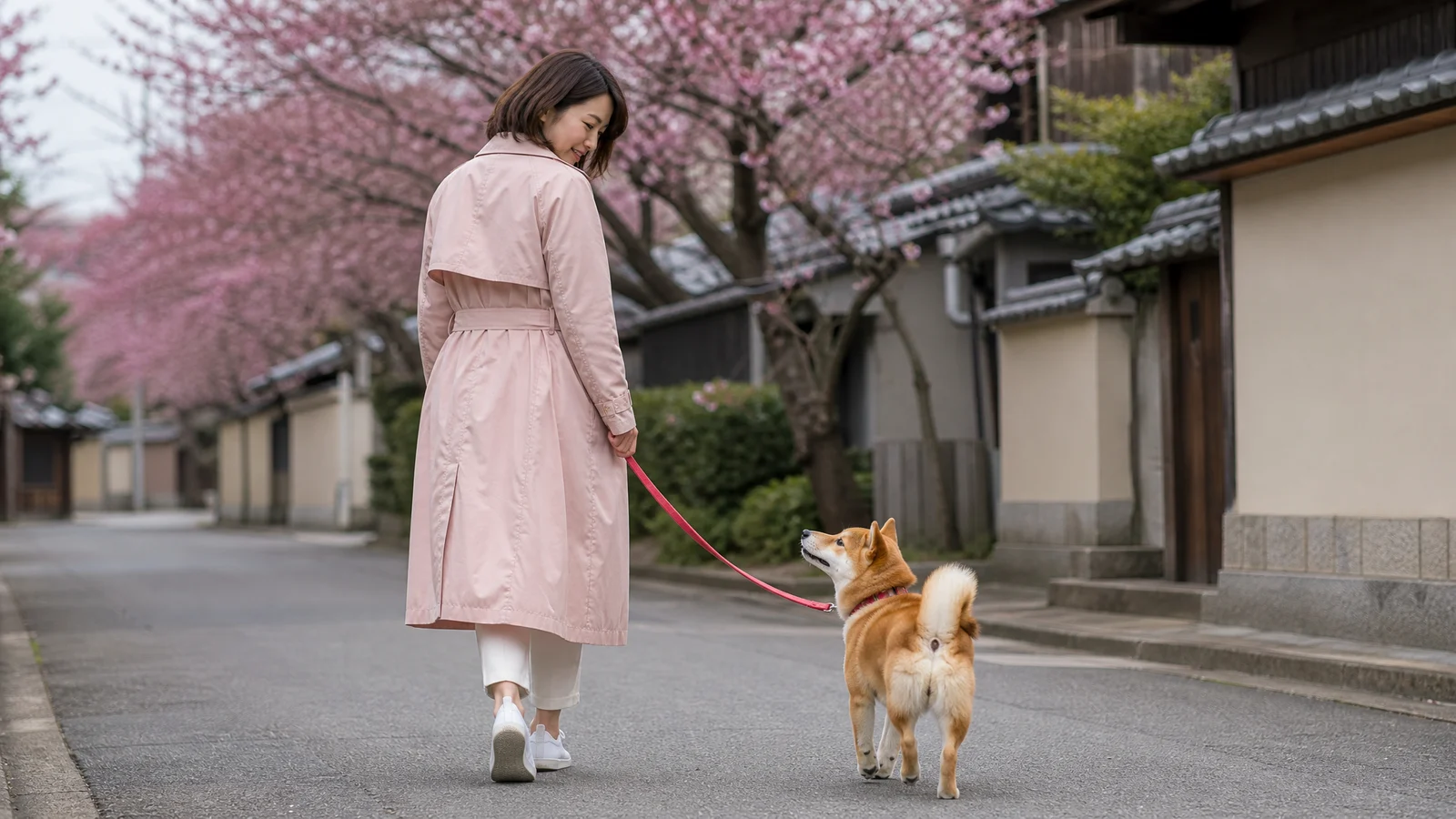
Halfway down the sidewalk, the leash loses its soft curve and draws a straight line from your hand to the harness. Your Shiba Inu leans toward a smell near the curb. If you keep moving, pulling works. If you drag them back, the walk becomes a contest neither learner understands.
A useful loose-leash walk is not a perfect heel. The dog can sniff, look around, and change pace while keeping enough slack for both bodies to move comfortably. Your job is to notice the first change in leash shape and choose the branch that makes slack productive again.
Below, you'll find a sidewalk decision tree that begins before the door opens, then follows tension, voluntary check-ins, and common street events. It keeps the leash as safety equipment and uses food, distance, access, and movement as rewards. Read the dog and surroundings at every branch, because no single response fits every pull.
Loose-Leash Training Setup for a Shiba Inu
Begin with equipment that fits securely and allows ordinary movement, and a comfortable harness can protect the neck from pressure, but no tool teaches the skill by itself. Check the maker’s fit instructions, inspect wear, and confirm that your dog cannot back out before practicing outdoors.
Let your arms hang naturally and select a leash length that leaves a visible curve without trailing on the ground. Extra material should be gathered safely rather than wrapped around a hand. The goal is a readable connection. A line that starts tight gives you no early signal and gives the dog no way to discover slack.
Start Where Orientation Works
Offer a familiar cue near the closed door. If your dog can eat, turn toward you, and take a step without surging, continue to a quiet exit. If they cannot, move farther from the door or practice inside. The first branch asks about conditions, not obedience.
Choose an easy stretch with room to change direction, and a crowded corner, narrow passage, or cluster of dogs leaves few humane choices if excitement rises. Time and location are training variables, so a quieter route is active teaching rather than avoidance.
Keep rewards accessible before you move, and deliver food beside the seam of your pants so returning to that area is valuable. Tossing payment ahead can restart the very acceleration you are trying to change, while reaching late encourages the dog to forge and watch your pocket.
Choose One Observable Goal
Do not begin by asking for an entire block of slack. Choose one result: a glance toward you, one step near your side, or a return of the curve after mild tension. Mark that instant and pay promptly. Small criteria make the tree easy to follow under real sidewalk pressure.
| You observe | Mark now? | Next move |
|---|---|---|
| A soft curve and steady pace | Yes, at intervals | Continue toward the destination |
| A voluntary look back | Yes | Reward beside you, then release |
| The leash beginning to straighten | Not yet | Slow or stop before leaning grows |
| No food interest or orientation | No | Add distance or choose an easier route |
Use the table with three handling priorities in mind. Each priority protects a clean next decision:
- Keep the dog physically secure.
- Preserve enough distance for thinking.
- Reward the first recoverable piece of slack.
The table keeps marking separate from bribing, and show food after the wanted action whenever possible. If you must lure through an unusually difficult moment for safety, treat that as management and lower the challenge next time rather than counting it as learned loose-leash behavior.
Loose-Leash Training at First Tension
First tension is the useful decision point. Waiting until the dog is braced at the end of the leash makes both bodies work harder. Notice the curve narrowing, stop your forward motion, and keep your hand stable. The environment pauses without a backward pull.
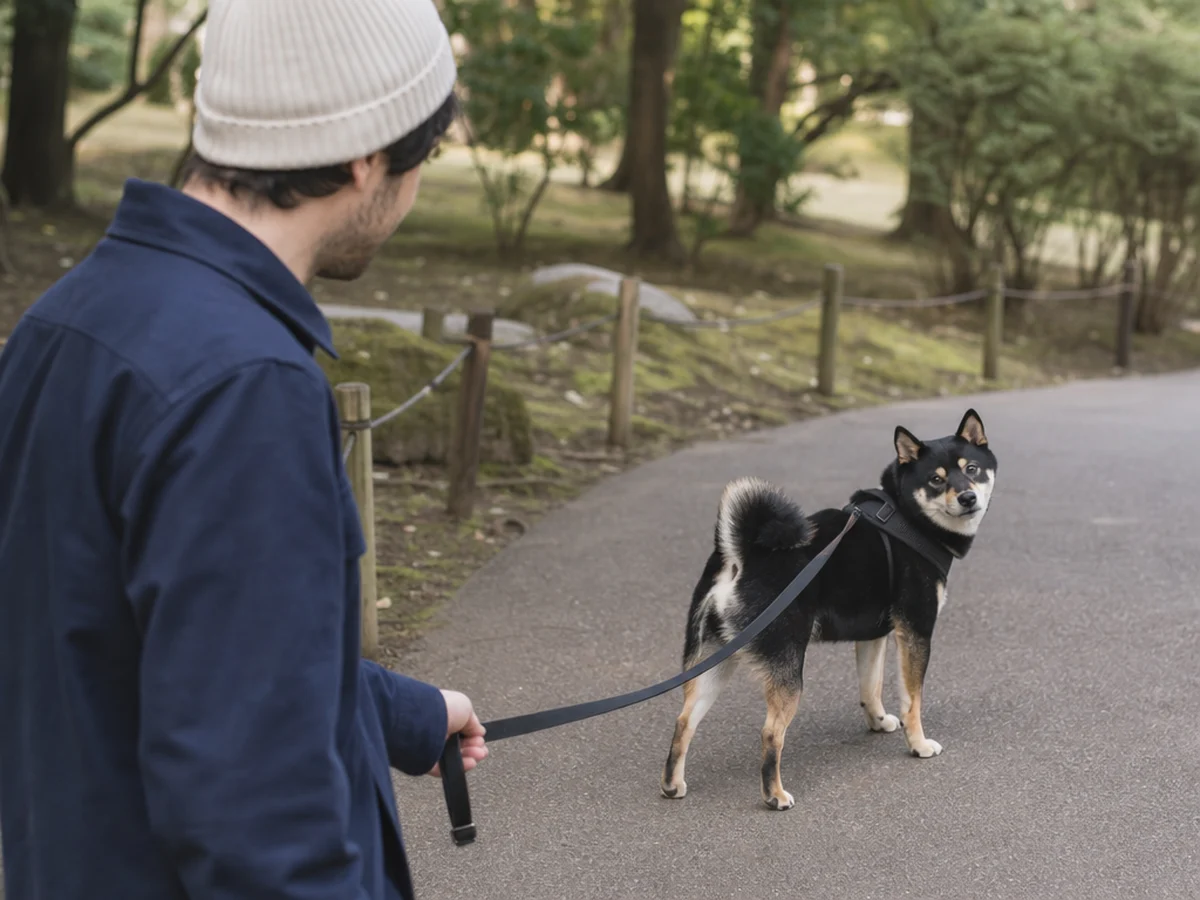
Loose-leash guidance from PDSA recommends stopping when the dog pulls and waiting rather than pulling back. That consequence is clear: tension does not advance the walk, while slack allows movement to resume.
Finish when the leash curve is still recoverable. A calm route home protects the lesson better than one extra crowded block. Tomorrow, begin with the setup that worked, then add only a little difficulty. Loose-leash walking grows from many good decisions, not from winning a pulling contest.
When Slack Returns
If your dog shifts weight back, turns their head, or takes a step toward you, mark the return of slack, and reward beside your leg, then move forward again. Access to the smell or destination can become part of the payment, which makes the lesson relevant to the dog’s original goal.
Use the smallest return that creates a curve at first, and demanding a full sit after every pull may add an unrelated task and create a stop-start ritual. The leash itself supplies the criterion: tension pauses progress, and a soft line reopens the route.
If the dog repeatedly bounces from slack into a lunge, shorten the distance to the goal, and walk a small arc, reward several connected steps, and release to sniff from closer range. The problem may be an oversized approach rather than ignorance of the rule.
When Tension Holds
Standing still is not always enough. If your dog continues leaning or becomes more aroused, turn away in a smooth arc and invite them with your voice or a familiar hand target. Reward when they turn with you. Direction-change guidance supports rewarding the dog as they follow the turn without yanking the leash.
Create distance until the body softens and food interest returns. Then decide whether to reapproach at an easier angle or leave. Leaving can be the correct branch when traffic, another dog, or a tight space makes repetition unsafe. Training quality matters more than finishing a planned route.
A leash should not become a device for pulling the dog out of every decision, and your feet change the picture, while the line prevents unsafe movement. When you need immediate safety, move decisively to distance and pay reconnection once you have room.
Shiba Inu Leash Training Through Check-Ins
A check-in is a voluntary turn of the head or body toward you. It can mean the dog noticed your movement, is seeking information, expects reinforcement, or is simply sampling the environment. Avoid assigning one fixed emotion. The trainable fact is that attention returned without a cue.
We regularly see check-ins strengthen when the person marks the first small rotation of the muzzle instead of holding out for direct eye contact. Mark the turn while it is happening. Reward near your body, then release your dog to continue sniffing or walking. This pattern teaches that checking in does not always end exploration. It often becomes the hinge that keeps two independent travelers connected.
Make Looking Back Useful
Reward early check-ins frequently, especially before turns, crossings, and changes in pace, and you can gradually vary payment once the behavior is strong, but keep environmental rewards in the mix. Sometimes the response earns food, and sometimes it earns a cheerful release toward a safe smell.
Do not ask for constant eye contact. Watching the path is necessary, and sniffing is a normal part of a walk. A loose line and periodic orientation are better functional goals than a dog craning upward for an entire outing.
If check-ins vanish, consider the whole tree. The setting may be too difficult, the reward may have lost value, or the walk may have run too long. Return to an easy turn indoors or near home, then rebuild outdoors. The Shiba Inu training dossier explains why a learned response may not transfer automatically.
For the next walk, choose one short segment and one branch to practice. The Shiba Inu training room tour can refresh the indoor name response and hand target before you test them on that segment. You might mark every voluntary look on the quiet first block, or rehearse stop-and-slack before reaching a favorite tree. Keep the rest of the outing easy and managed.
Schedule routine veterinary checkups for your dog, and discuss a sudden change in gait, stamina, or willingness to wear familiar equipment with your veterinarian. A sidewalk tree can adjust training conditions, but it cannot explain physical discomfort.
Use Check-Ins Before Direction Changes
Signal your turn after a spontaneous glance when possible, then move in a smooth arc and reward the dog for joining you. This sequence makes the check-in useful information rather than a pose. Practice on quiet stretches before expecting the skill near crossings or moving distractions.
Security remains nonnegotiable even with beautiful check-ins. The AKC breed profile says a Shiba is not reliable off leash outside a confined area. Loose-leash success improves the shared walk, but it does not create permission to remove the safety system.
Leash frustration describes agitation connected to being restrained. Barking, lunging, or inability to disengage calls for space and a plan from a qualified reward-based professional. This article does not provide operational aggression work.
Loose-Leash Training Sidewalk Branches
Real walks combine destinations, smells, people, dogs, vehicles, and changing surfaces. The final zone uses the same logic under those pressures. Identify what your dog wants, observe whether they can stay under threshold, and choose movement, distance, or a pause that preserves learning.
Choose by body and leash rather than by schedule. We want the next move to reflect the dog's current ability to orient, eat, and recover. A route planned at home should never outrank evidence on the sidewalk.
A dog pulling toward a favorite sniff can often learn through access. Stop at first tension, wait for slack, reward, and move together toward the spot. A dog who is agitated by restriction needs more distance and a lower-pressure exit rather than repeated approaches to the trigger.
| Sidewalk branch | Useful response | End condition |
|---|---|---|
| Pulling toward a safe sniff | Pause for slack, then approach together | Sniffing begins on a curved leash |
| Rushing toward the usual corner | Walk an arc and reward connected steps | Pace settles before the corner |
| Startled by sudden movement | Create distance and allow recovery | Normal movement and food interest return |
| Repeated tension late in the walk | Take the simplest safe route home | Session ends before frustration grows |
The table offers decisions, not a rigid script. If your dog cannot eat or orient, skip the closer approach even if the row suggests it. If the route has narrowed, prioritize safe distance. The tree must yield to the actual sidewalk.
- Continue when the curve returns easily.
- Retreat when orientation or food interest disappears.
- Finish when recovery becomes slower on each branch.
Our final route choice is deliberately modest: return to the easiest block that produced a curve, one voluntary glance, and a calm release to sniff. When that sequence feels ordinary, extend it by a few steps or one gentle turn. The dog then meets difficulty through a known path instead of a surprise.
 Training basicsCan a Shiba Inu Ever Be Trained Not to Run Away Off Leash?
 BehaviorWhy Does My Shiba Inu Scream and What Can I Teach Instead?
 Training basicsHow to Train Your Shiba Inu With Rewards