 Shiba Inu
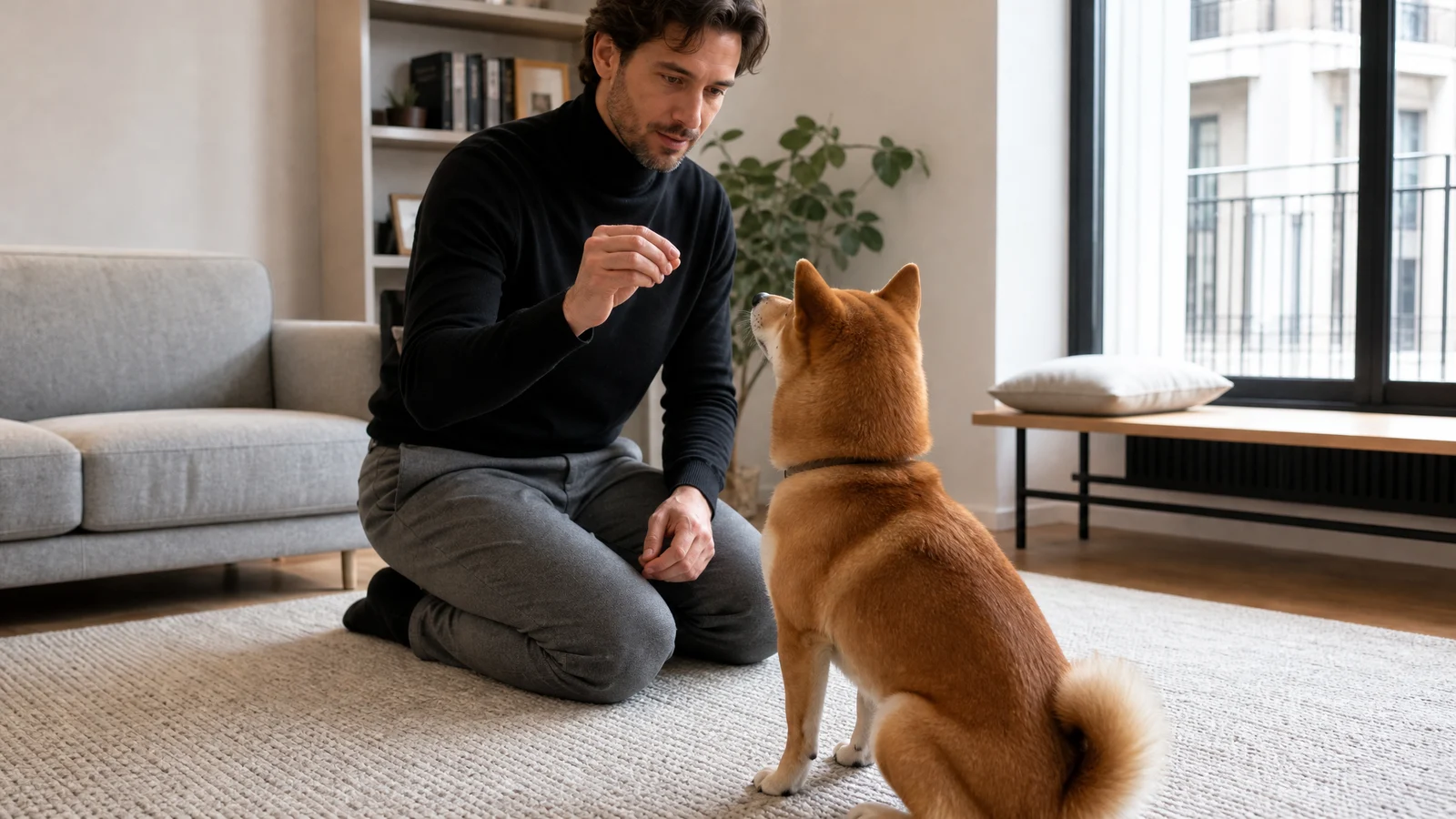
“Smart but not obedient” sounds like a contradiction only if intelligence and compliance are the same measure. They are not. A dog may notice patterns quickly, remember which behavior opened a door, and still decide that a scent on the ground is more valuable than repeating a familiar sit.
This dossier examines the evidence behind the label instead of assigning every Shiba Inu one fixed rank. The breed club describes a very intelligent dog, while a major breed profile places trainability at 2 of 5 and mental stimulation needs at 4 of 5. Those facts can coexist. The six files below separate learning, memory, motivation, problem solving, repetition, and outdoor safety so you can train the dog in front of you.
Shiba Inu Intelligence Ranking Evidence
A ranking needs a defined task, and speed at learning a spoken cue, persistence with a puzzle, sensitivity to human gestures, and independent problem solving are different performances. Combining them into one number can make a neat chart while concealing what a particular dog actually does well.
One Number Cannot Capture a Breed
Breed averages cannot describe every individual, and experience, reinforcement history, health, setting, and the design of the task influence performance. A dog who declines dry food in a testing room may appear slow, while the same dog solves a household access problem immediately because the outcome matters.
The roadmap asks about a ranking source, but the available brief does not support a universal numerical position, and the honest answer is that no allowed source here supplies one. We can examine supported traits and direct observations without inventing a place on a league table.
Separate Notes for Separate Abilities
In our training work, we usually find concrete verbs more useful than flattering labels. Make an individual profile that describes what your Shiba actually does. Note whether your dog learns a marker quickly, remembers locations, tries new actions, follows a point, or persists when a food toy changes. These observations are more useful than “genius” or “stubborn” because each one suggests a training design.
A quick pattern learner may need careful consistency, since accidental rewards also form patterns. A persistent solver may enjoy shaping but become frustrated by an impossible container. Intelligence is not a prize you prove. It is a collection of abilities you channel and support.
Obedience Evidence in Shiba Inu Training
Obedience tests whether a dog performs a requested action under particular conditions, and it depends on understanding, motivation, distraction, and reinforcement history. Failure can arise anywhere in that chain, so it cannot automatically show that the dog lacks intelligence or is choosing defiance.
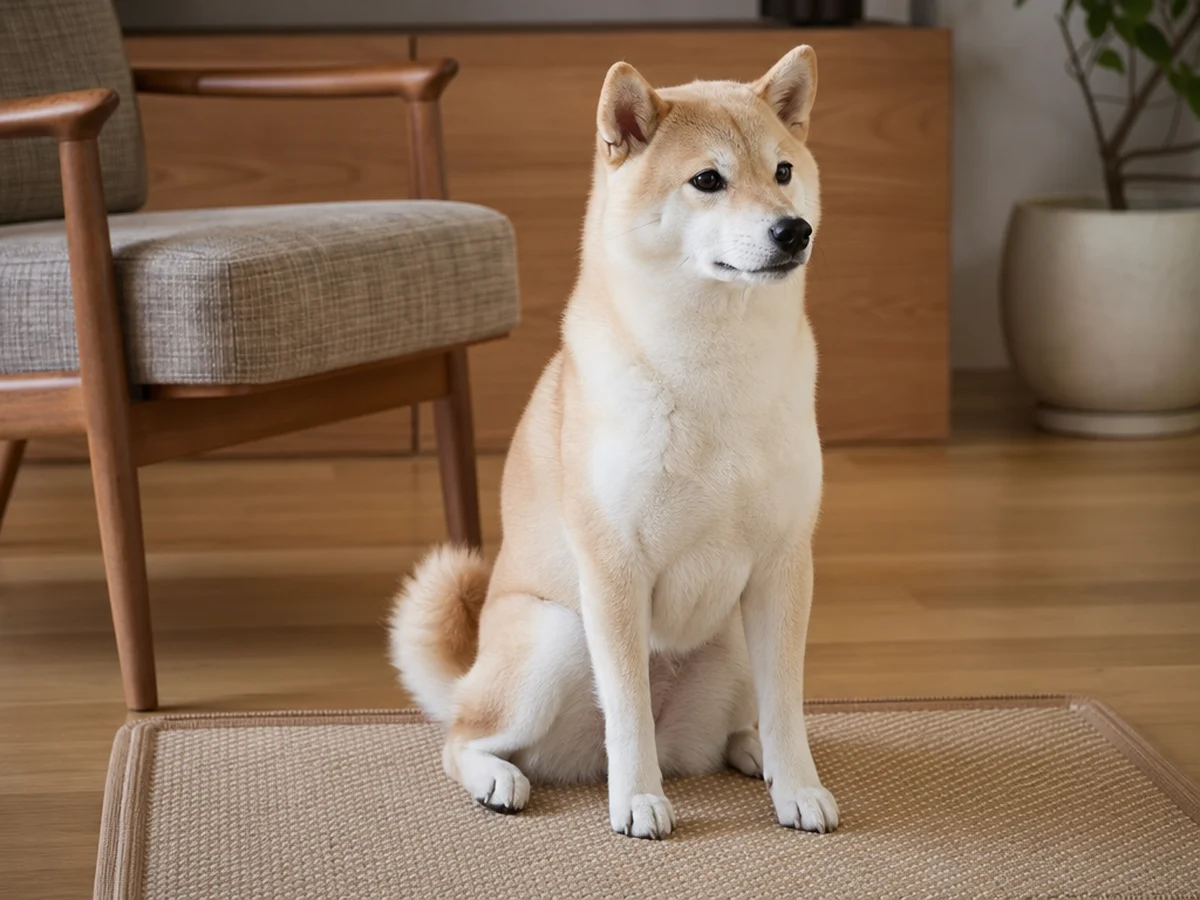
Smart Dogs Do Not Always Comply
A dog can understand a cue and still pursue another outcome, and if sitting makes the leash clip on while moving away prolongs an interesting game, behavior follows the stronger consequence. The solution is not to debate whether the dog “knows better.” Redesign what each choice predicts.
The national breed club calls the Shiba very intelligent and says an owner should have experience with this type of dog. That description warns against equating intelligence with effortless compliance. Skillful teaching still requires clear criteria and rewards the learner values.
Trainability Depends on the Offer
The 2-of-5 trainability rating leans toward self-willed rather than eager to please. Treat the score as a planning clue. Make the first response easy, deliver the reward promptly, and end before attention drains. Then test whether the cue survives a small change in place.
Reward-based training works by making a behavior more likely through something the dog enjoys. That mechanism invites a better question than “Will my smart dog obey?” Ask which result makes cooperation rational in this moment.
Memory Evidence Changes Shiba Inu Training
Memory in training includes more than the word attached to an action, and dogs remember contexts, sequences, body movements, and consequences. A cue practiced beside the treat cabinet may be partly supported by that location, which explains why it weakens when the picture changes.
Home Memory Does Not Transfer Everywhere
A response that is fluent in one room may be unfinished elsewhere, and the sidewalk adds smell, motion, distance, and previous habits. Rather than testing the strongest distraction first, build a ladder of locations and reward the familiar response generously at each new rung.
Change only one feature when possible, and face a different direction in the same room, then move to another quiet room, then work near a closed exterior door. This progression shows whether the dog understands the cue beyond one picture and prevents an outdoor miss from becoming a character judgment.
Consequences Belong in the Evidence
A recall cue can weaken if it consistently ends sniffing, play, or yard time, and the dog may remember the word perfectly and avoid the consequence. Reward arrival, sometimes release them back to the activity, and practice when you do not urgently need to leave.
The same principle applies to handling, confinement, and grooming cues, and if a hand target always precedes something the dog dislikes, their cheerful response may fade. Mix easy, well-paid repetitions into daily life so useful signals do not become announcements that choice is ending.
This evidence also explains why accidental learning can look clever. A dog may appear to predict your departure because keys, shoes, and a bag form a reliable chain. Change one harmless element and observe whether the prediction follows it. That is a small, ethical test of pattern memory.
Puzzle Evidence Improves Training Design
Problem-solving games let you watch learning without demanding formal obedience. The task should be safe, achievable, and easy to adjust. Success is not finishing fast. It is staying engaged, trying actions, and recovering when one attempt does not work.
Search Exhibit Before More Difficulty
Place several open boxes on the floor and put food in some of them. Let your dog investigate without pointing to every answer. A beginning scent search can use baited open boxes so finding the food pays the dog directly. Keep every container open and stable, and scatter them far enough apart that the first search is obvious rather than frustrating.
Watch the search strategy. Does your dog sample every box, follow odor from a distance, return to a previously paid location, or ask you for help? None of those observations establishes a universal rank. Each shows how this learner approaches uncertainty and where the next challenge belongs.
Shape a New Action Exhibit
Set down a stable, unfamiliar object and mark any safe interaction. A look may earn the first reward, then a step toward it, then a nose touch. Do not lure the final action from the start. Shaping reveals whether the dog offers variations and notices which one produced the marker.
If the dog freezes or leaves, lower the criterion. Reward looking from farther away or replace the object with something familiar. Difficulty should invite investigation, not trap the learner. The willingness to rejoin after an easy win is valuable evidence about confidence as well as problem solving.
Food puzzles can also turn part of a meal into mental activity. The enrichment guidance from ASPCA notes that food puzzles can slow eating and provide stimulation. Supervise new materials and remove anything your dog tries to break or swallow.
Repetition Evidence in Shiba Inu Training
Repetition is necessary for fluency, but identical drilling can produce disengagement. A dog who has answered correctly several times may find no new information in the next request. Their departure does not prove exceptional intelligence, yet it does tell you the session design stopped competing.
Preserve the criterion while varying the route to it. Ask for a hand target from a different angle, reward a sit before a door opens, or practice a mat from another starting spot. Variation checks understanding, while a stable marker and release keep the rules legible.
- Repeat enough to make the action recognizable.
- Change one context feature to test flexible understanding.
- Mix an easy success between harder attempts.
- End while the dog still chooses to participate.
The list is not a fixed session recipe. A dog who needs another easy repetition should get it, while a dog who offers the behavior fluently may be ready for a new angle. Let accuracy and engagement determine the next choice rather than chasing a predetermined count.
For a larger troubleshooting process, the Shiba Inu training scorecard separates clarity, reward, and setting. That audit is useful when supposed boredom might actually be confusion or a payment that lost value.
Maintain routine veterinary care alongside the learning record. If a familiar problem-solving or learned behavior changes abruptly, record the context and ask your veterinarian whether comfort, senses, or health could be contributing before you redesign the lesson.
The most dangerous myth in this dossier is that a clever dog can eventually be trusted anywhere. Intelligence may support fast learning, but it does not erase competing motivation or create certainty around wildlife, traffic, and sudden movement. A learned recall remains a behavior, not a force field.
Shiba Inu Intelligence Cannot Guarantee Outdoor Obedience
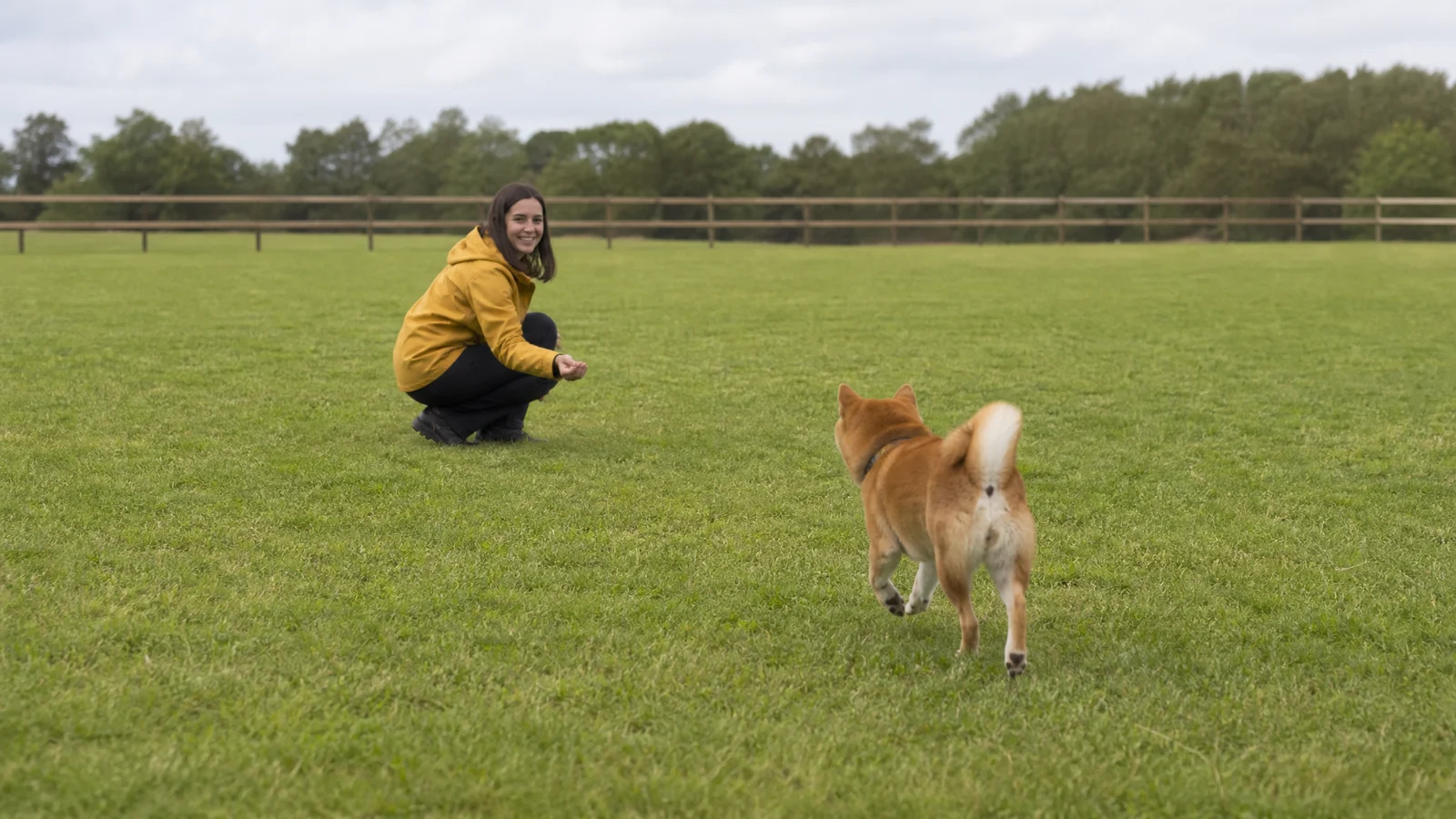
The AKC breed profile says obedience work does not make a Shiba dependable without a leash in unsecured places. Use secure fencing and a leash as ordinary safety equipment, even when indoor responses are excellent.
Practice recall because it is valuable backup. Preserve three boundaries while you do it:
- use secure equipment in open places
- reward arrivals without promising certainty
- reserve unleashed activity for fully enclosed areas
Practice familiar returns in easy settings before adding outdoor motion. For early skill design, the Shiba Inu first-lesson tour shows how an easy response can travel from a quiet room toward a secured outdoor setting. Reward turns toward you, arrivals, collar touches, and releases back to safe exploration. Work on a long line only in appropriate open space with careful handling, and keep true off-leash activity inside fully enclosed areas.
The case disposition is nuanced. The breed has supported descriptions of high intelligence, lower trainability, and substantial mental stimulation needs. Those are compatible when intelligence is separated from automatic compliance. Your dog’s profile should remain individual rather than a stereotype pasted onto every choice.
Gather three kinds of evidence next: how quickly a new pattern appears, how well it transfers to a changed context, and which consequences keep participation strong. Record observations rather than flattering labels. The resulting dossier will not give you a dramatic rank, but it will give you a much better training plan.
Close the file with one question that can be observed tomorrow, such as whether the dog transfers a target to a new room or persists with a simpler box search. That narrow question produces evidence. A sweeping label about cleverness only produces another argument.
 BehaviorDo Shiba Inu Get Along With Other Dogs?
 Training basicsShiba Inu Pulling on Leash: Teach a Loose-Leash Walk
 Training basicsCan a Shiba Inu Ever Be Trained Not to Run Away Off Leash?