 Shiba Inu
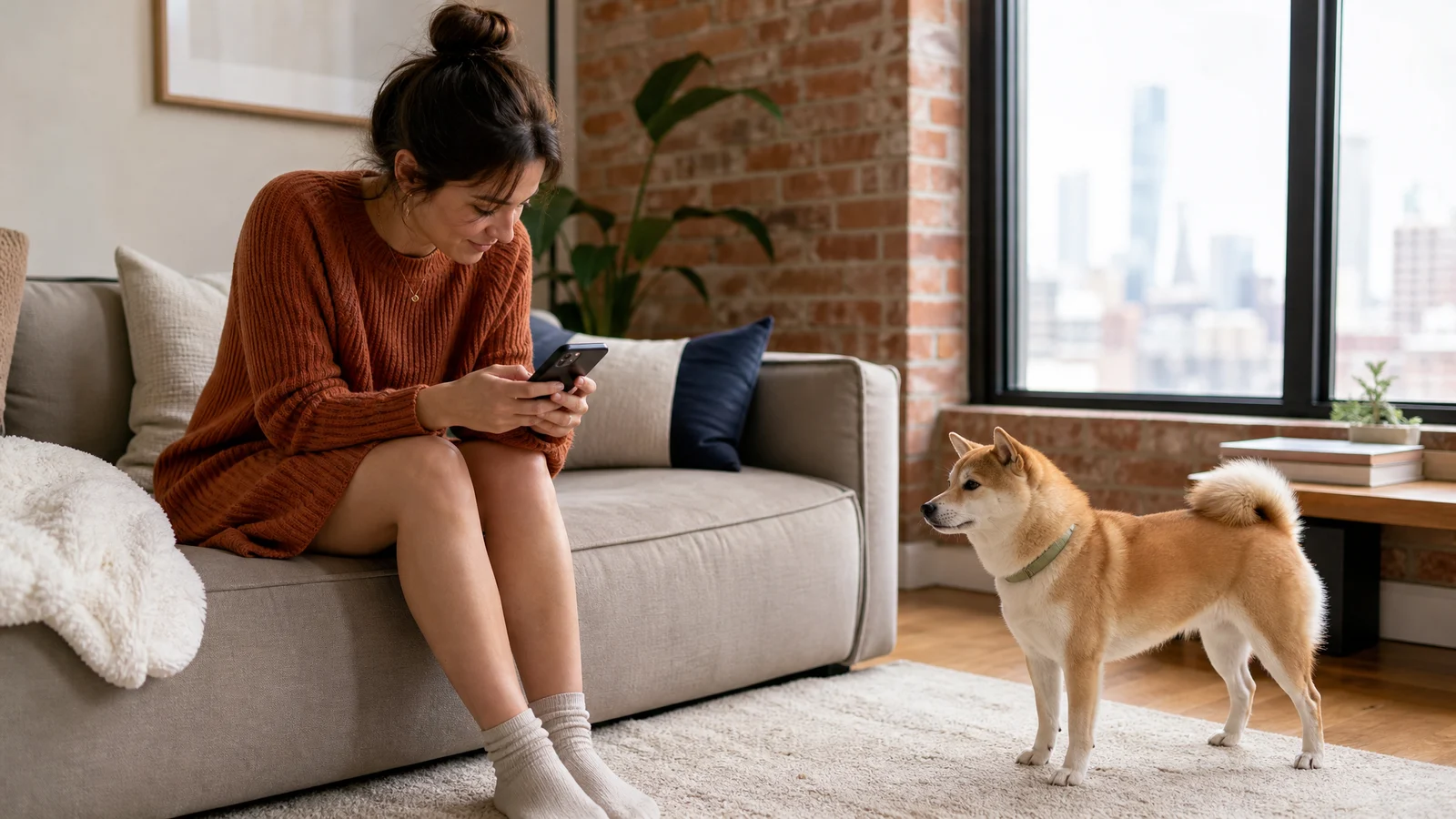
Before a guest arrives, decide what the visit is for. A plumber does not need to meet the dog. A friend staying for dinner may be able to share a room without touching them. A familiar relative might be invited into a brief, structured interaction if the Shiba Inu is interested.
That choice prevents a common hosting mistake: treating every visitor as a socialization exercise. A Shiba can be aloof with visitors and still behave safely in a well-managed home. The host's job is to select the least demanding greeting that serves the visit, brief the person, and let the dog decline contact.
Use the three hosting options below as a menu, not a ladder. No greeting is a complete plan, optional observation is another, and interaction is reserved for the dog who repeatedly chooses it.
A Shiba Inu Aloof With Visitors Needs a Hosting Contract
Write the contract before the bell rings. It should name where the dog will be, what the guest will do with their hands and eyes, who handles doors, and what ends the plan. We prefer a short instruction that a visitor can remember over a long explanation of the breed.
The National Shiba Club of America describes Shibas as intelligent dogs who need consistent training and notes the importance of responsible family interactions. Its breed guidance supports taking the household role seriously, especially around escape safety. A visitor plan must never leave the exterior door as an afterthought.
Send the briefing before arrival when possible. At the door, repeat only the essentials while the Shiba Inu is behind the chosen barrier. A guest who feels uncertain should not be asked to improvise with food, reach for the dog, or enforce cues.
Assign the exterior door to one adult and the dog's setup to another when two people are available. If one host is working alone, secure the dog before approaching the entrance. This order protects against an escape while the host is answering questions or signing for an item.
- Enter without calling, staring at, or reaching for the dog.
- Keep bags, coats, and food in the host's chosen place.
- Let the host deliver rewards unless another role was planned.
- Do not follow the dog when they move away.
- Pause conversation if the host needs to change the setup.
The Contract Includes Departure
Reward-based structure is not the absence of boundaries. The AVSAB position statement explains that humane training can include routine and clear guidelines. Here, the guideline is that access to a guest belongs to the host and the dog, not to the visitor's wish for a greeting.
The contract should also cover departure. Put the Shiba back behind the barrier before coats, hugs, bags, and the exterior door begin moving. A calm visit can still end with a door dash if the household treats goodbye as an unplanned exception.
Three Menus for a Shiba Inu Aloof With Visitors
Choose among three complete services. The dog's behavior may change during the visit, but the plan never has to become more social. Moving from interaction back to observation, or from observation to no greeting, is good hosting when the dog needs more space.
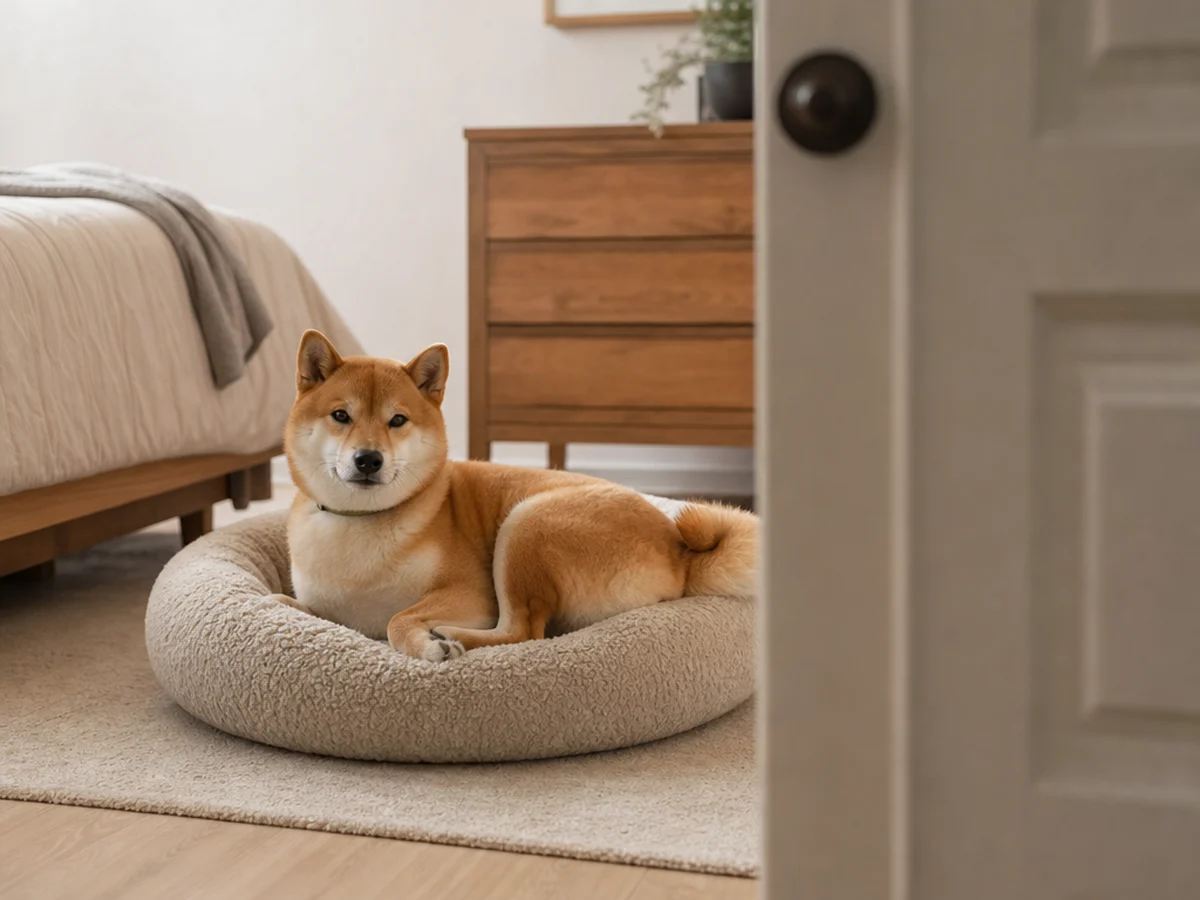
Menu One Keeps the Visit Separate
Use no greeting for repairs, deliveries, energetic children, large groups, or any visit where doors will open repeatedly. Set up a comfortable room or enclosed area before arrival with water, bedding, and an appropriate activity. The guest never enters that space.
Separation is also suitable when the Shiba is ill, sore, unusually tired, or already upset. Keep regular vet visits, and speak with the veterinarian about sudden behavior change. A training exercise should not be built on a day when the dog may be uncomfortable.
Check the dog without turning each check into a release test. If they rest, eat, or settle away from the gathering, the menu is working. The result is a completed household task, not a missed social opportunity.
Give separation its own pleasant routine before guests exist. The dog can enter the area for naps, food activities, or quiet household periods, then leave at other times. A space that appears only when strangers arrive may acquire more emotional weight than the visit itself.
For longer work, schedule quiet check-ins based on the dog's normal needs rather than on visitor curiosity. Take the dog out through a route that does not cross the work area, then return to the protected room. The worker still does not need to participate.
Menu Two Offers Observation Without Contact
This option lets the dog share space at a distance while the visitor behaves like background scenery. Place the guest sideways in a predictable seat and give the Shiba Inu an open route back to their resting area. The dog may look, sniff the air, leave, or settle without being summoned.
Reward calm observations from the host's hand or by placing food away from the guest. Tossing food toward the visitor can pull a conflicted dog closer than they intended. Food placed behind the dog supports retreat and lets the next approach, if any, remain voluntary.
Some Shibas bark at the change in the room. The ASPCA recommends identifying why barking occurs before choosing a response in its barking overview. A few alert barks followed by distance and recovery need a different plan from sustained barking, lunging, or a dog who cannot disengage.
Keep observation periods short enough that success does not depend on endurance. The host can end shared-room time after a few calm minutes and let the dog rest elsewhere. A second brief appearance later is optional, not the reward the dog must earn.
Menu Three Allows a Structured Interaction
Offer interaction only after the dog has chosen to remain nearby with loose movement. The guest can continue to look away and keep hands still. A brief sniff does not authorize petting, and the dog moving within reach does not create an obligation to touch.
If the dog solicits contact in a familiar way, the host can invite one short stroke on an easy body area, then ask the guest to stop. The pause reveals whether the dog returns for more or moves away. Repeated return is clearer information than endurance during continuous petting.
Keep the first interaction smaller than the guest expects. End while the dog can still leave calmly, and let the gathering continue without another attempt. A successful greeting is not measured by duration or by whether the visitor eventually touches the dog's head.
Do not transfer handling cues to a visitor merely because the first sniff went well. Paw touches, collar holds, lifting, hugging, and face-level photographs are separate demands. A dog who selected proximity can still reject all of them without contradicting the earlier choice.
If the guest will visit often, preserve the same low-key opening across several visits. Familiarity can grow through predictable coexistence. It does not need a planned increase in petting, proximity, or excitement each time the person returns.
When a Shiba Inu Aloof With Visitors Shows Distress
A reserved Shiba Inu may prefer distance while still eating, exploring, resting, and responding to the host. Distress changes those ordinary abilities and calls for less exposure. Look for a cluster rather than grading sociability.
- Repeated attempts to escape or hide without settling
- A fixed stare, hard body, or inability to take familiar food
- Relentless vocalizing, lunging, or repeated charging
- Recovery that remains slow after the guest is gone
Do not make a guest responsible for changing those signs. Return to separation and restore a quiet route. Best Friends describes reactive behavior such as barking, growling, pulling, and lunging in its reactivity guidance, and recommends starting work at a manageable distance rather than pressing closer.
The dog's history matters. A Shiba Inu who was formerly relaxed and now reacts to familiar people needs a veterinary conversation. A dog with a bite history, repeated lunging, or fear that cannot be managed safely needs an individualized plan from a qualified reward-based professional.
Movement Changes the Visitor Picture
A Shiba's independence can also be mistaken for fear when the dog simply chooses another room after investigating. The AKC breed overview describes a confident, energetic dog with a distinct temperament. Read the individual in front of you rather than demanding a universal level of sociability.
The site's discussion of Shiba Inu temperament can help when food seems unimportant or the dog walks away. Walking away during a visit is useful communication, not a training failure to chase down.
- Secure the dog before a seated visitor stands or carries objects.
- Handle other household animals under their own plan.
Consider the visitor's movement as well as identity. A dog may cope while someone sits, then become vigilant when that person stands, carries a box, or walks toward the hallway. If transitions are the difficult part, secure the dog before they begin instead of repeating the hardest moment.
Households with other animals need a separate plan for them. Excitement between dogs can make visitor behavior harder to read, while blocked routes can remove the Shiba's exit. The site's Shiba Inu socializing guide can support the dog-to-dog portion without turning the visitor menu into a group exercise.
A Visit Menu for the Next Guest
Match the visit to the least demanding option that keeps everyone safe. The same dog may use different menus for a repair worker, a quiet friend, and a crowded celebration. Consistency means the rules remain clear, not that every person receives the same access.
| Visit | Starting menu | Reason to stay there | Reason to step back |
|---|---|---|---|
| Delivery or repair | No greeting | The task can finish without contact | Doors, tools, or movement increase risk |
| Quiet seated friend | Observation | The dog can look and leave freely | Food refusal or persistent vigilance |
| Familiar adult | Observation first | The dog repeatedly chooses proximity | The dog avoids hands or stops returning |
| Party or children | No greeting | A private area stays calm and secure | There is no need to increase difficulty |
Afterward, record only what changes the next choice: which menu was used, whether the dog could rest or eat, whether they returned after leaving, and how quickly ordinary behavior resumed. Do not grade affection. The evidence decides whether the next visit can use the same contract or needs a quieter one.
One smooth visit does not require promotion to a harder menu. Repeat the option that worked until it feels routine for hosts and dog. Predictability is a useful outcome in its own right, especially when the visitor's purpose has nothing to do with meeting the dog.
For the next guest, choose go, pause, or end at each decision point. Go means the current menu still looks comfortable. Pause means hold the arrangement without adding contact. End means move the Shiba Inu to the prepared private space. A good host protects those options, so being aloof with visitors never has to become a forced performance.
 BehaviorFood Bowl Trust for a Shiba Inu Who Guards Their Dinner
 CareShiba Inu Shedding: Teaching Your Dog to Enjoy the Brush
 Puppy trainingShiba Inu Puppy Playing Too Rough? Teach Gentle Mouths