 Shiba Inu
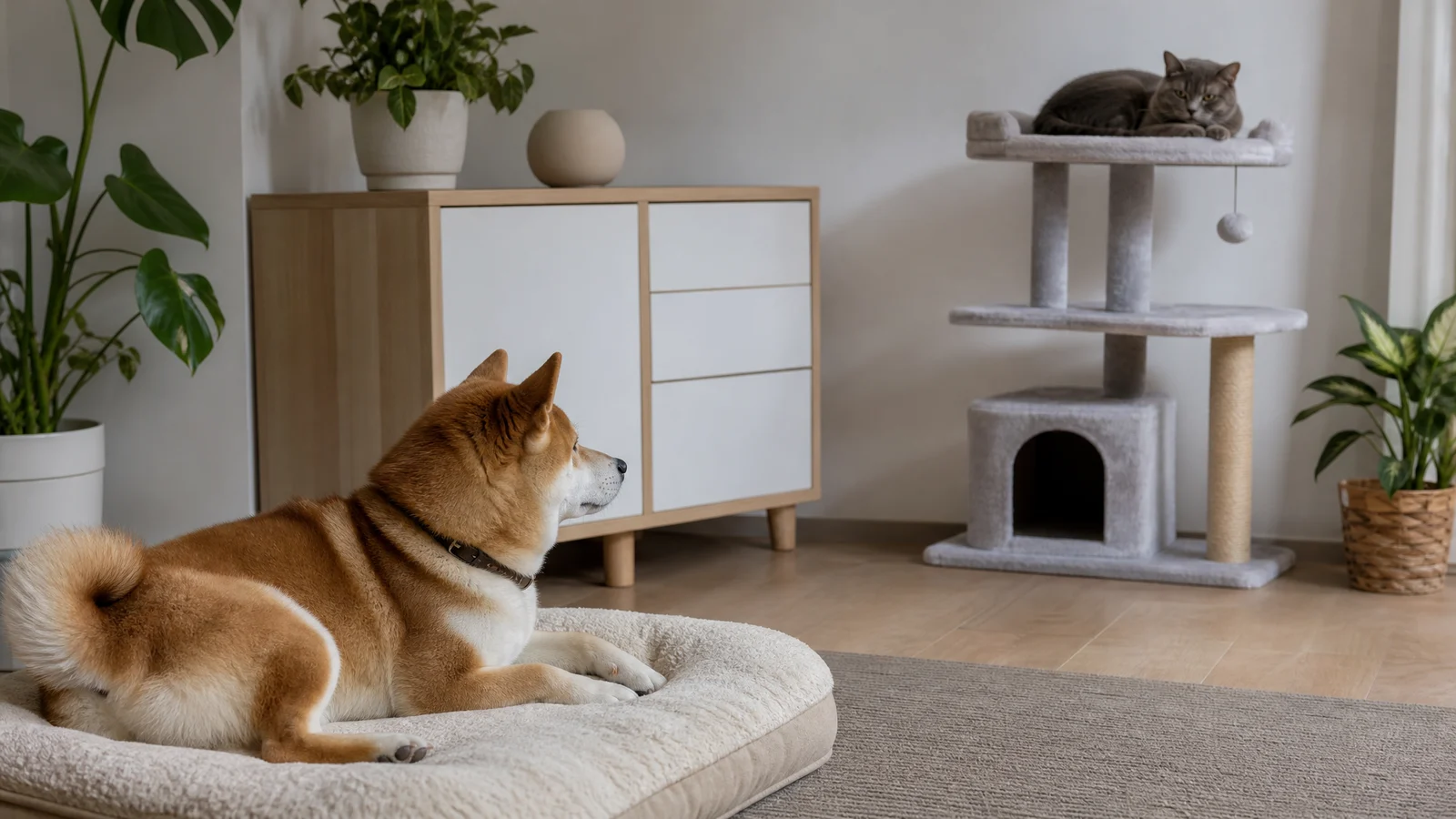
Your Shiba Inu freezes mid-stride in the doorway. Across the room, the cat has stopped too, body low, eyes locked. Neither moves. Many owners know this scene well, and it is easy to read as rudeness or jealousy. It is neither. It is prey drive, the same wiring that made this breed useful for finding small game.
The stakes are real. A standoff that tips into a chase teaches the dog that chasing works, and a Shiba who catches small animals may not let go. Handled well, the same dog can learn to treat the cat as part of the furniture.
Below, we cover the origin of the instinct, how to read the freeze, the management and staged introductions that keep both animals safe, and how to reward calm looks away from the cat.
Why a Shiba Inu Fixates on Cats
The Shiba is the smallest of the Japanese native breeds, and the standard describes a dog developed for hunting by sight and scent in the dense undergrowth of mountainous country. The breed club adds that Shibas were bred to flush birds and small game, and were occasionally used on wild boar. Flushing means finding something small and hidden and setting the animal in motion. The job rewarded a dog who noticed the faintest twitch and committed to the chase.
A cat fits that picture closely. Cats are small, quiet and move in bursts. The keen, alert senses described in the UKC standard go straight to them, and the same standard calls the breed agile and athletic, able to move quickly with nimble steps. A Shiba closes a gap fast.
Prey drive is not limited to wildlife. Some owners report Shibas who chase or go after other pets, including cats and a smaller senior dog in the home. Sudden small, fast movement is often what sets off the lunge. Owners see this with squirrels and rabbits, and even with a bag blowing across a yard.
A cat that darts past can trigger the same response, so smooth, predictable cat movement and distance matter in everything below. We have trained this breed for many years, and the order never changes: management first, training on top.
How Prey Drive Shapes Shiba Inu Behavior and Training
Chasing and catching reward themselves, so every rehearsal strengthens the next one. Owners describe dogs who keep trying after near misses, corner squirrels and treat the catch as a goal. Others take birds in the backyard, in midair or by bolting out the door, and some swallow small prey whole or refuse to release it. Some dogs carry kills into the house. To their brain, a cat is not a separate category. A cat is another small, fast mover.
The drive also shifts with age. Some owners report a young Shiba who ignored animals and then changed after puberty, including an off-leash dog who stayed reliable until the drive arrived. Others saw strong drive already at 7–8 months. A few describe low-drive dogs, calm even around pet cockatiels. Dogs vary a lot, so early calm around a cat should not be assumed to last. The table shows how to plan for each stage.
| Stage | What owners report | What to do |
|---|---|---|
| Puppy | Some young dogs ignore animals | Socialize early and start rewarding calm looks. Keep barriers in place anyway. |
| 7–8 months | Strong drive already visible in some dogs | Recheck how the dog reacts to cat movement and tighten management. |
| After puberty | Drive can rise, and a reliable dog can change | Assume the drive may increase. Keep leashes and gates as the default. |
| Adult | Anything from low drive to a persistent chaser | Judge by the individual dog, not by how they behaved last year. |
Reading a Shiba Inu's Freeze Before Training
A Shiba standoff is not a calm moment. It is a loaded one. The freeze is the pause before a decision, and it usually ends the instant the cat moves. Learn these signals in the dog:
- A dog about to chase often goes still mid-step, with weight shifted toward the cat.
- The stare turns hard and fixed, the mouth closes, and the dog stops answering to their name or taking treats.
- The body stiffens, the tail rises or goes rigid, and the dog leans into the leash toward the cat.
- A slow, low stalk replaces the freeze, which means the chase is close.
Read the cat too. Flattened ears, a low crouch, a puffed tail or a sudden dash all raise the odds of a chase, and the dash is the most likely trigger. Act during the freeze, not after the lunge. Say the dog's name once, step back to add distance, and reward the moment they turn toward you. If they cannot turn, calmly walk them out of sight on the leash and try again from farther away.
Some Shibas show interest in animals but mostly just watch, without lunging or hurting them. Treat a watcher as a dog in training, not as a safe dog.
Management That Makes Training Possible
Every unsupervised chase is practice, and this breed practices well. Management stops the practice while training catches up. Start with space. Give the cat a room or a level the dog cannot reach, plus escape routes such as shelves, cat trees and a path to a safe room. Shibas are agile, so choose tall gates or closing doors over low barriers. A cat with nowhere to go will bolt, and bolting is the trigger.
- Keep the dog on a leash or tethered to you whenever the cat is in the same room during training.
- Feed the cat and place litter boxes where the dog cannot reach them.
- Close a door instead of trusting a gate when nobody is watching.
- Give the dog a crate or pen with a chew for times you cannot supervise. Shibas should be able to spend time crated even when people are home, so make it part of the routine.
- Use a fenced yard and leashed outings. A Shiba can never be considered reliable off leash outside a confined area, and no amount of obedience training changes that.
Keep a stash of treats that truly beat the cat's appeal, as we explain in Shiba Inu treats worth the effort. If a smaller dog shares the home, the same separation applies. Our guide to Shiba Inu and other dogs covers that side.
Training a Shiba Inu Through Safe Cat Introductions
Common advice says to let the two animals work it out. With a prey-driven breed we disagree. A Shiba who catches small animals may shake them and may not let go, so a first meeting without structure risks a badly hurt cat and a dog who has just learned that chasing pays. Move through stages, and advance only when the current one looks boring.
- Swap scents. Rub a cloth on the cat, leave it near the dog's food or bed, and reward calm sniffing. Do the same with bedding in the other direction.
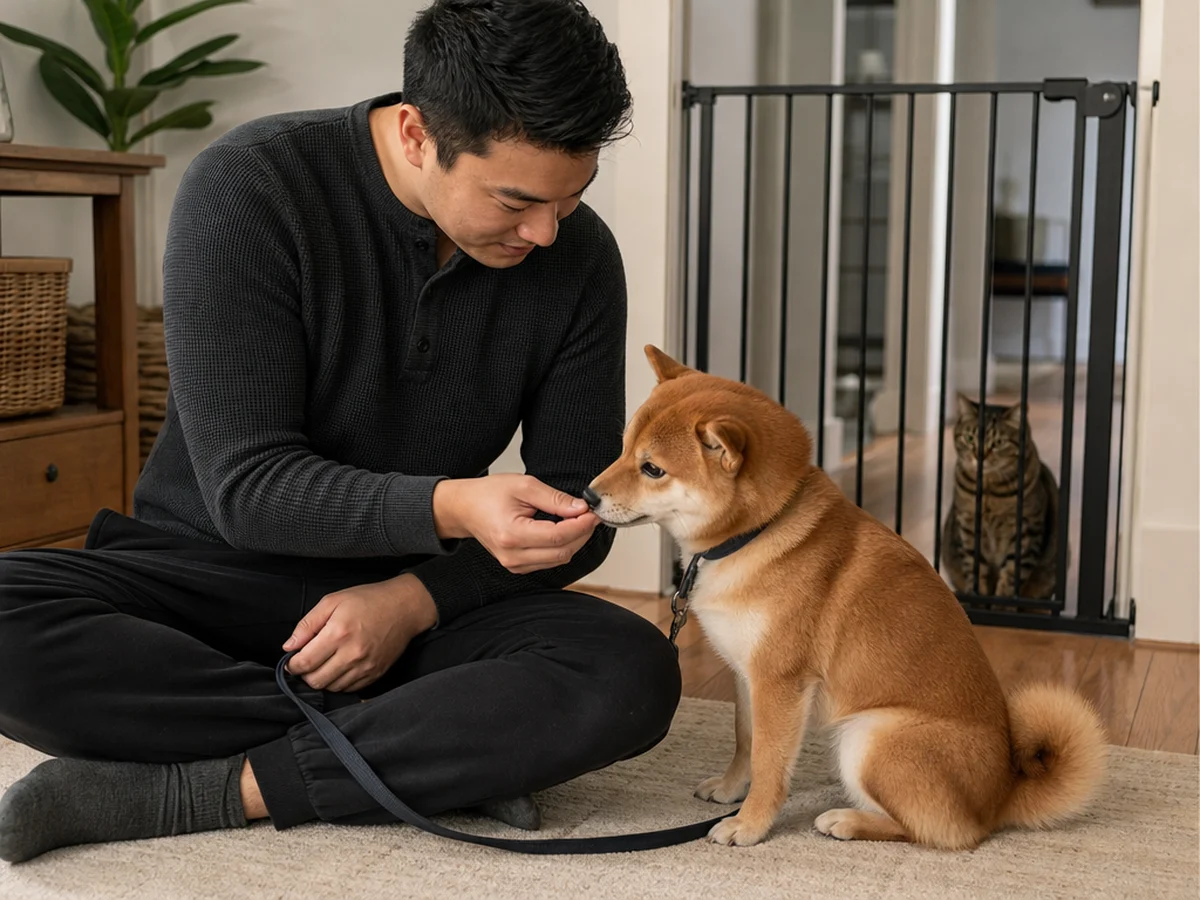
- Meet through a barrier. Use a tall gate or a door opened a crack, with the dog on a leash and the cat free to leave. End the session before the stare sets in.
- Shrink the distance across the barrier as the dog starts looking away from the cat on their own. Mark and reward each look-away.
- Hold leashed sessions in the same room. The leash stays in your hand, the dog stays far from the cat, and the cat keeps access to high ground and an exit.
- Extend the sessions only when both animals look relaxed, and keep supervising even then.
Be honest about the limits. Some pairs never reach unsupervised time. If the dog locks on at every stage, or the cat panics at the smallest sound, stay where you are or step back. Separate them whenever you leave the house, whatever the progress.
Training Calm Looks Away From the Cat
Owners report that rewarding a stop, a stare and a wait for a cue reduced or controlled chasing, and that many dogs also respond to a cue like leave it around animals. Results vary by animal. The breed club notes that most Shibas will work for treats, which gives you a lever. The goal is a dog who sees the cat, glances, and turns to you because that choice pays.
- Find a distance where the dog notices the cat but can still take food.
- When the dog glances at the cat and then looks away, mark it with your marker word, such as yes, and hand over the treat beside you, well away from the cat.
- Repeat until the dog looks, then turns to you without being asked.
- Close the distance a little at a time while the cat moves smoothly and predictably.
- Add leave it once the look-away is dependable, and teach it first away from the cat.
Treats are not the only payment. A game of tug, a walk, or a door opening can all reward a calm choice. If the dog stares for long, you are too close, so add distance. Over time, calm becomes the default because it is the behavior that earns things.
Living With a Shiba Inu and a Cat Long Term
Expect some management to stay in place for good. Many owners say the dog can never be off leash outdoors because of prey drive. UK advice makes a related point, noting that farmers may shoot dogs who chase farm animals, so even a well-behaved dog is safer kept on leash.
With reward-based practice, progress is gradual, and old instincts can still flare even in a dog who looks reliable. Recheck your setup after puberty, because drive can rise.
Give the nose a legitimate job as well. Scent games such as K9 Nose Work begin by having the dog search for a treat or toy tucked into one box among several, and they use the sight-and-scent skills this breed was built for. Keep up regular vet visits, and raise any sudden change in behavior there.
The dog's body looks softer around the cat, with loose shoulders and an open mouth. Looks at the cat are quick, and the dog turns to you for the treat without a cue. The cat moves around the room in a relaxed way, eats and naps in view of the dog, and does not hide.
Stalking or hard staring may persist after steady work, or even get worse. The cat may hide constantly, stop eating or avoid rooms they used before. Any attack, bite or injury, even a small one, is also a warning sign.
The Shiba's wiring does not switch off, so calm comes from layering. Management keeps the chase from being practiced, and rewards make the quiet choice the one that pays. Build both, and some Shibas and cats can share a home, though some pairs never reach unsupervised time.
 BehaviorTraining an Independent Shiba Inu: Making Treats Worth the Effort
 Training basicsShiba Inu Intelligence Ranking: Clever but Not Compliant
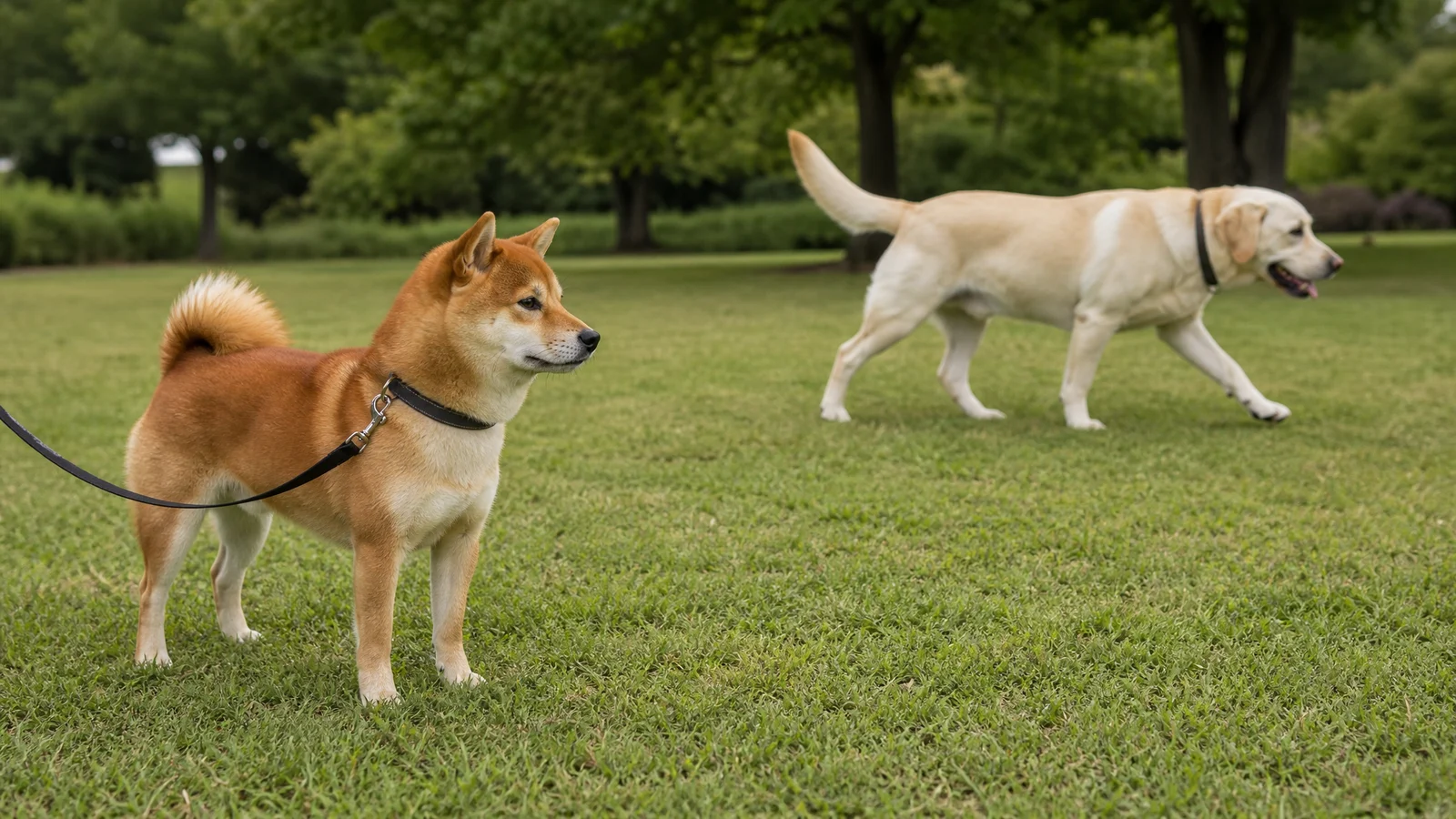 BehaviorDo Shiba Inu Get Along With Other Dogs?