 Shiba Inu
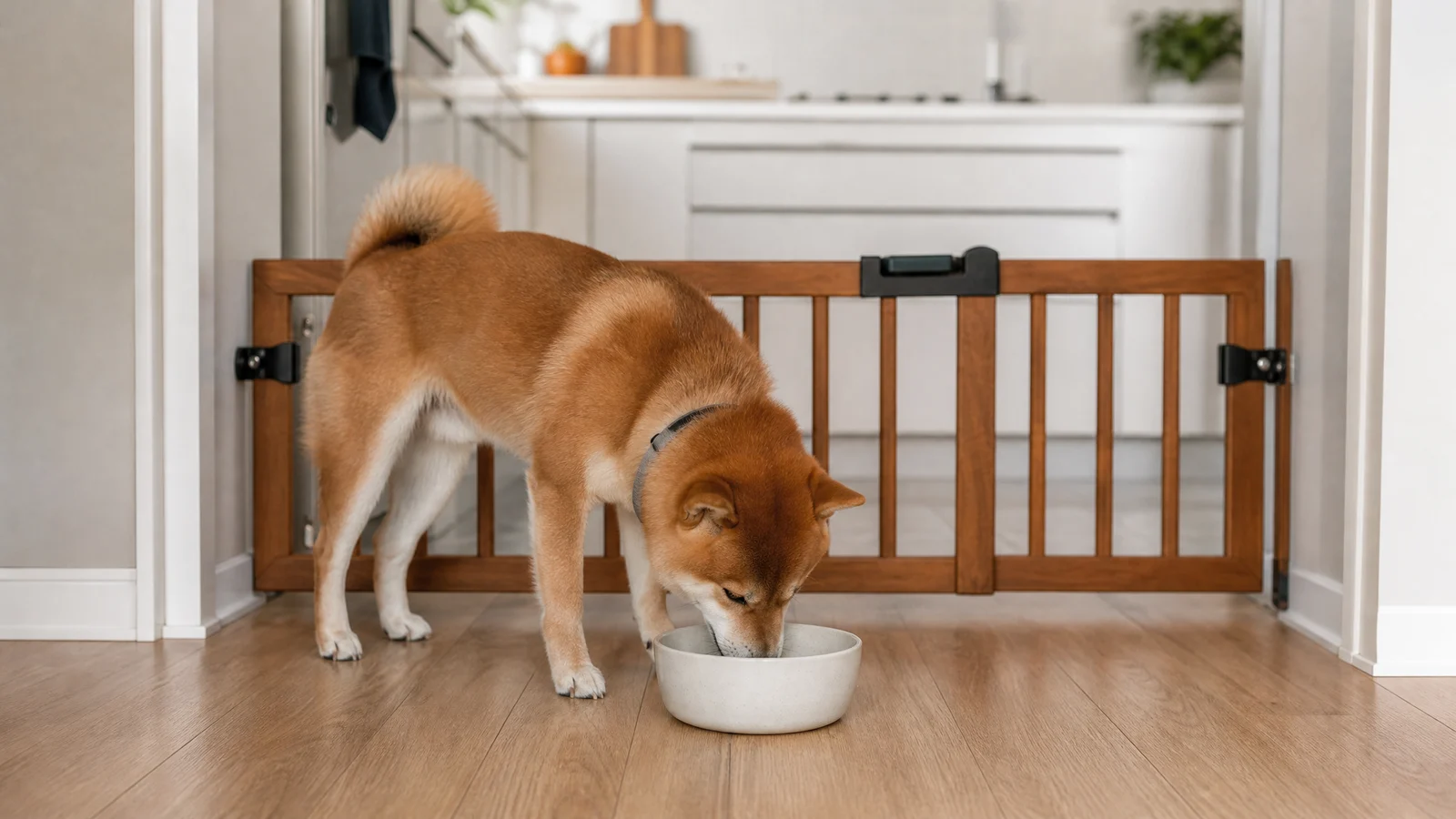
Food guarding needs a risk classification before anyone changes the Shiba Inu's bowl routine. A dog who speeds up as someone passes is giving different information from a dog who freezes, growls, lunges, or has bitten. Children, other pets, narrow spaces, and high-value chews can raise the stakes immediately and must change the household response.
Use this article as a triage atlas. Start with the color that matches the most serious behavior you have seen, then consult the plate for the guarded item. The purpose is not to provoke a response so you can label it. It is to prevent another incident while deciding what help and practice are appropriate.
Guarding Food Risk Colors for a Shiba Inu
Choose the highest applicable color, even if the dog is relaxed most days. We do not recommend retesting by reaching toward food, taking the bowl, or asking a child to walk past. Historical behavior is sufficient evidence for safer management.
| Color | Observed behavior | Household response |
|---|---|---|
| Green | Loose body, ordinary eating, easy disengagement without pressure | Preserve privacy and teach trades away from meals |
| Amber | Speeding up, hovering, hard stare, blocking, freezing, or low growl | Separate people and pets, stop informal tests, seek qualified guidance |
| Red | Snap, lunge, bite, pursuit after retreat, or risk involving a child | Use complete physical separation and contact the veterinary team promptly |
A growl is valuable warning information. Removing the warning through confrontation does not make the underlying concern disappear. Record what the dog had, who or what approached, distance, and the earliest body change you noticed.
Keep regular vet visits and discuss new guarding or a sudden increase with the veterinarian. Pain, illness, hunger changes, and other medical factors can affect behavior. A household plan cannot identify or resolve a health cause.
Guarding Food Starts With a Protected Meal
Feed in a quiet area with a closed door or sturdy barrier, away from children and other animals. Set the meal down before the dog enters, then let them eat without traffic. Clear the dish later, once the dog is elsewhere by choice.
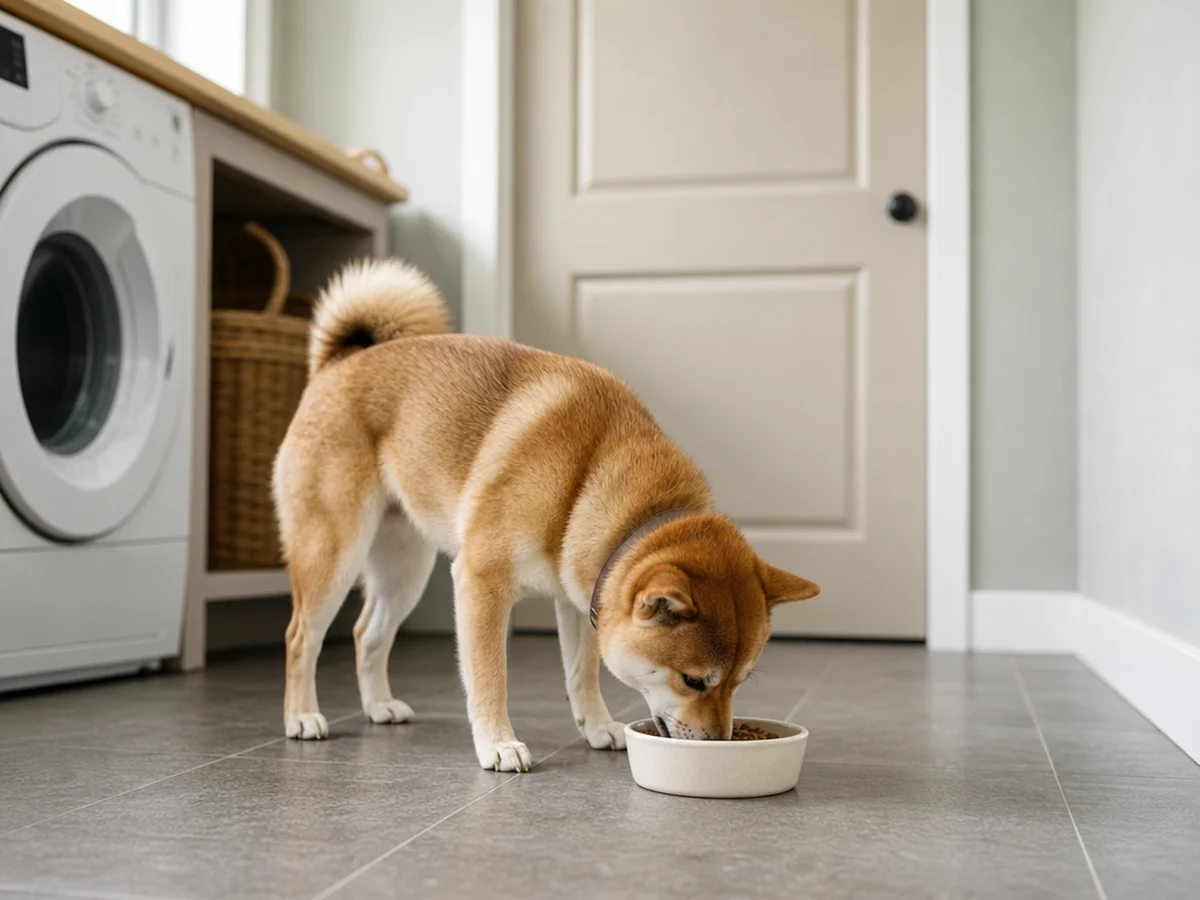
This arrangement is the safe baseline that prevents repeated approach conflicts. The National Shiba Club of America's breed guidance emphasizes consistency. Here, that means every person follows the same privacy rule.
Do not use a crate for meals if the dog's guarding extends to the crate entrance or if retrieving the bowl creates conflict. A room with a door may be easier to service after the dog leaves. Choose the setup by the actual traffic pattern, not by a generic picture of where dogs should eat.
If several dogs live together, separate them before food appears and keep them apart until bowls, preparation scraps, and leftovers are cleared. The site's guide to Shiba Inu socializing covers broader dog-to-dog management, but meal separation should remain explicit.
Map approach routes from the dog's eating position. A laundry doorway used by children, a water bowl shared by several animals, or a pantry people enter mid-meal can defeat an otherwise quiet corner. Change room traffic before attempting any behavior exercise.
Tell visitors the feeding rule without inviting them to assess the dog. Put bowls and chews away before company if privacy cannot be maintained. Changing meal time is safer than asking a guest to judge distance in an unfamiliar home.
A Guarding Food Atlas by Resource
The bowl is only one plate in the atlas. A dog may eat meals comfortably yet guard a long-lasting chew, stolen wrapper, dropped food, or another animal's dish. Name the resource precisely because prevention and exchange options differ.
Meal Bowl Plate
For a green case with no history of threat behavior, an adult can occasionally pass at a comfortable distance and toss a better morsel into the bowl without stopping. The person continues away immediately. The approach should predict an addition, not a hand entering the dish.
If any amber sign appears, stop the exercise and increase separation. Do not keep moving closer to discover a limit. The dog's existing response has already said the distance or context is too difficult for casual household practice.
The addition should be better than the meal component already available and easy to deliver without lingering. If the dog abandons food to monitor the person, the exercise is not creating the intended meaning. Return to full privacy and discuss the observation with a professional.
Do not run this exercise at every meal. Protected eating remains the norm, while any planned addition is brief and optional. Repetition should not make a person's appearance another event the dog must watch closely.
Chew and Toy Plate
Give high-value chews only in a place where they can remain until the dog finishes. If the item must be removed for safety, avoid reaching into the dog's space. Use a planned exchange only if it has been practiced with easy, low-value objects and remains safe in that moment.
A trade means the dog moves away to receive something clearly worthwhile while the person retrieves the first item at a distance. It is not showing food and then grabbing the item as the dog stretches forward. Return safe objects sometimes so the exchange does not always predict permanent loss.
Practice the exchange with an object the dog barely values before considering a cherished chew. Say the cue once, place the reward far enough away to create movement, and leave the original item alone if the dog declines. Refusal is information that the proposed trade is not ready.
Stolen Item Plate
Prevention begins with closed trash, clear counters, laundry storage, and managed children's items. Chasing a Shiba with a stolen object can increase swallowing or guarding. Secure the area, reduce commotion, and use an already-trained exchange when doing so is safe.
For dangerous objects or suspected ingestion, contact a veterinarian or emergency clinic for immediate guidance. Do not rely on an online training plan when the object is toxic, sharp, expanding, or otherwise hazardous.
After a safe stolen-item event, repair the access route rather than making theft the dog's daily lesson. Close the hamper, move food preparation farther from the edge, and give children a lidded storage area. Prevention reduces how often the household must make urgent exchange decisions.
The site's guide to Shiba Inu behavior problems can help distinguish access and chewing patterns from guarding. A dog may steal without guarding, guard without chewing, or show both. Record the behaviors separately so the response fits the event.
Multi-Pet Traffic Plate
Food preparation can trigger guarding before bowls reach the floor. Keep animals separated during preparation, feeding, and cleanup, and do not scatter treats into a group when one dog guards. Individual delivery prevents competition and lets each animal finish without surveillance.
The AKC breed overview notes the Shiba's strong personality and activity needs. Breed traits may help explain why control of access matters, but they do not predict which individual will guard. Use the household's actual history as the deciding evidence.
Water stations can also become traffic points even when water itself is not guarded. Provide more than one accessible location in a multi-pet home and avoid placing a bowl in a narrow passage. The goal is to prevent animals from having to negotiate access at close range.
Who Handles Shiba Inu Guarding Food Cases
Green cases can maintain good habits through privacy and low-pressure exchange games away from meals. Amber cases deserve professional input before closer approach work. Red cases require complete management and prompt coordination with a veterinarian and a qualified behavior professional.
The American College of Veterinary Behaviorists explains professional credentials in its owner guidance. A board-certified veterinary behaviorist is a veterinarian with specialized behavior training. That distinction matters when aggression risk, health questions, and household safety overlap.
Ask any professional to explain the management plan, the purpose of each exercise, and how the dog's comfort will be protected. The plan should teach desired behavior without intentionally provoking guarding. Household members should understand what they must not rehearse between appointments.
Bring concise incident notes rather than recreating the behavior during a consultation. Include the resource, location, people or animals present, earliest warning, and outcome. Video is useful only when captured incidentally and safely, never when staging a confrontation for the camera.
- No child approaches, touches, feeds, or trades with a guarding dog.
- No person removes food to prove that removal is allowed.
- No animal shares the feeding space or cleanup period.
- No exercise advances after freezing, growling, snapping, or retreat.
- No dangerous item case waits for a routine training appointment.
Recall advice from the RSPCA includes using a long line for safe practice and avoiding scolding when the dog returns. The relevant principle for exchanges is that coming away from a resource must remain safe. A dog should not be punished after making the requested choice.
The Household Boundary Around Guarding Food
Write one boundary that remains true even after improvement: meals are private, children never test the dog, high-value items appear only in managed spaces, or animals eat behind separate doors. A clear boundary removes negotiation from busy moments and protects the gains made elsewhere.
Review incident notes with the professional rather than searching for a day when the dog can be challenged. Softer posture, normal eating pace, easy movement away, and quicker recovery may show that the environment feels safer, but they do not justify surprising the dog.
Households sometimes want a final test that proves the problem is gone. Replace that idea with a maintenance review. Confirm that barriers still work, new family members know the rules, and travel or holidays have not created an unplanned feeding arrangement.
The goal is not a Shiba Inu who tolerates any hand near any resource. It is a household that stops creating threats, recognizes early warning, and uses qualified help for risk. That boundary builds food-bowl trust because people become predictable, not because the dog learns that every possession can be taken.
Post the boundary where meals are prepared and include it in instructions for pet sitters. Revisit it after a move, a new animal, a child's changing mobility, or any incident. A rule that survives those transitions and ordinary busy household days reliably is more protective than a one-time demonstration of tolerance.
 CareShiba Inu Shedding: Teaching Your Dog to Enjoy the Brush
 Puppy trainingShiba Inu Puppy Playing Too Rough? Teach Gentle Mouths
 Puppy trainingShiba Inu Teenagers: Keeping Rewards Strong While They Test Rules